
Key Takeaways:
IV therapy for fatigue may support hydration and nutrient delivery when dehydration, low intake, poor absorption, or a nutrient deficiency is contributing to low energy.
B12 and other B vitamins are commonly included in energy-focused IV formulas because they support normal energy metabolism.
Magnesium, IV fluids, vitamin C, and sometimes amino acids may also be included depending on the person's needs and treatment goals.
There is no single best IV drip for fatigue because low energy can have many different causes.
Persistent or unexplained fatigue should be properly evaluated rather than treated as a vitamin deficiency automatically.
Feeling unusually tired can be frustrating, especially when rest does not seem to restore normal energy. Fatigue can develop for many reasons, including dehydration, poor sleep, stress, inadequate nutrition, nutrient deficiencies, hormonal changes, or an underlying health condition.
That is why IV therapy for fatigue is best viewed as a supportive wellness option rather than a universal solution for tiredness.
Energy-focused IV formulas may combine hydration with vitamins and minerals involved in normal metabolism. The exact ingredients can vary, and the most appropriate option depends on what may actually be contributing to low energy in the first place.
Why Can Low Energy Happen?

Fatigue is a symptom, not a diagnosis.
A busy schedule, insufficient sleep, dehydration, restrictive eating, or prolonged stress can all leave someone feeling depleted. Low levels of nutrients such as vitamin B12 or iron may also contribute to tiredness, while thyroid disorders, infections, hormonal changes, and other medical conditions can produce similar symptoms.
This matters when considering IV therapy for energy.
An IV infusion may help address hydration or provide selected nutrients, but it cannot correct every possible cause of fatigue. Someone who is tired because they are dehydrated may have very different needs from someone whose fatigue is related to anemia, poor sleep, or a thyroid condition.
Persistent fatigue therefore deserves a broader look at symptoms, lifestyle, health history, and, when appropriate, laboratory testing.
How Does IV Therapy Work for Fatigue?
IV therapy delivers fluid and selected nutrients directly into a vein.
Because the infusion enters the bloodstream directly, it bypasses the digestive tract. This route may be useful in situations where hydration is needed or where a provider determines that intravenous nutrient delivery is appropriate.
An infusion can contain fluids, vitamins, minerals, antioxidants, or other ingredients depending on the formulation.
However, IV delivery should not automatically be considered better than food or oral supplements. Many nutrients are absorbed effectively through the digestive system in healthy people.
For a closer look at the difference between these approaches, Drip Alchemy explains the key considerations in its guide to IV therapy versus oral supplements.
Which Vitamins Are Commonly Used in IV Therapy for Energy?
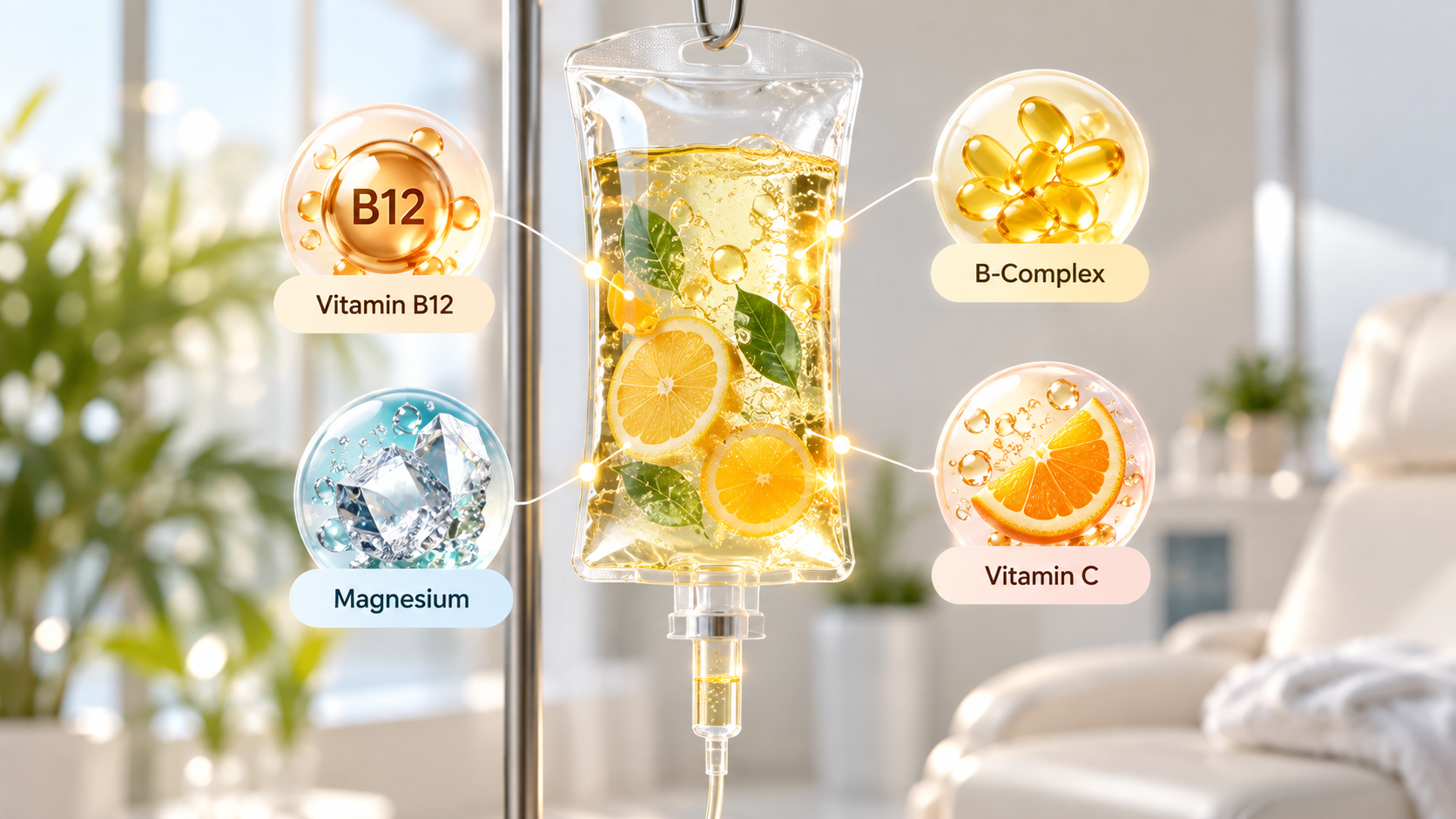
Energy-focused IV treatments often contain nutrients involved in normal metabolism, hydration, nerve function, or cellular activity.
The specific formula matters less than whether its ingredients match the person's actual needs.
Common options may include B12, other B vitamins, magnesium, vitamin C, IV fluids, and sometimes amino acids.
Vitamin B12
Vitamin B12 is one of the nutrients most strongly associated with energy because it supports several processes that help the body function normally.
It is involved in red blood cell formation, neurological function, and normal metabolism. When someone is deficient in B12, fatigue, weakness, or other symptoms can occur.
That does not mean additional B12 will automatically increase energy in someone whose levels are already adequate.
Its value is more meaningful when low B12, dietary intake, or absorption issues are relevant to the person's symptoms.
Drip Alchemy also has a detailed guide explaining how methylcobalamin works in the body, which provides additional context around this form of vitamin B12.
B-Complex Vitamins
B vitamins work throughout the body in processes related to metabolism, nervous system function, and converting nutrients from food into usable energy.
Energy-oriented IV formulas may include several members of the B-vitamin family rather than B12 alone.
These can include vitamins such as B1, B2, B3, B5, and B6.
A B-complex infusion should not be viewed as an instant stimulant. Instead, these vitamins support normal biological pathways that are already responsible for producing and using energy.
Their usefulness depends on the individual's nutritional status and the reason for treatment.
Magnesium
Magnesium is another ingredient often found in IV formulas designed around wellness, recovery, or low energy.
It is involved in hundreds of enzymatic reactions and contributes to normal muscle function, nerve activity, and energy-related cellular processes.
Low magnesium may occur for several reasons, including inadequate intake or certain health conditions.
Adding magnesium to an IV does not mean it will resolve all fatigue, but it may be considered when the provider believes magnesium support is appropriate.
The amount and suitability should always be individualized rather than based on the idea that more is automatically better.
Vitamin C
Vitamin C is commonly included in many IV formulations.
It functions as an antioxidant and plays roles in normal immune and cellular function. It may also be included alongside other vitamins and minerals in broader wellness infusions.
Vitamin C itself should not be described as a direct treatment for fatigue.
Instead, it may form one part of a formula selected for a person's broader wellness goals.
Drip Alchemy's guide to Vitamin C IV therapy explains this nutrient in greater detail.
Why Hydration Matters When You Feel Tired
Low energy is not always caused by a vitamin deficiency.
Dehydration can contribute to fatigue, headaches, sluggishness, reduced concentration, and a general feeling of being run down.
That is why the fluid component of an IV may sometimes be just as important as the vitamins added to it.
Someone who has been traveling, exercising heavily, recovering from a demanding schedule, or simply not drinking enough fluids may feel depleted partly because their hydration status has changed.
In these cases, IV therapy for energy and hydration options may focus on restoring fluids first rather than adding a long list of nutrients.
Drip Alchemy covers this more specifically in its guide to IV therapy for dehydration.
Can Amino Acids Be Included in an Energy IV?
Some IV formulas include amino acids in addition to vitamins and minerals.
Amino acids are the building blocks of proteins and participate in many metabolic and tissue-related processes throughout the body.
They may be included in formulas designed around energy, exercise recovery, or broader wellness goals.
Not every energy infusion needs amino acids, however.
Their inclusion should depend on the formulation, individual goals, and provider assessment rather than the assumption that adding more ingredients automatically creates a more effective drip.
A well-designed IV should be purposeful rather than crowded.
What Is the Best IV Drip for Fatigue?
There is no universal best IV drip for fatigue.
The right option depends on why someone feels tired.
A person who is dehydrated may benefit most from a hydration-focused approach. Someone with low B12 may require a different plan. Another person may have adequate nutrient levels but be exhausted because of poor sleep, stress, anemia, or another medical issue.
This is why the name of the IV on a treatment menu should not be the only deciding factor.
A good approach considers symptoms, hydration status, current supplements, medications, health history, and overall goals before choosing a formula.
Drip Alchemy's Vitamin Therapy, Infusions & Boosters service offers a broader look at available vitamin-based wellness options.
How Quickly Can IV Therapy Affect Energy?
The timing of any noticeable effect varies.
Someone who is mildly dehydrated may feel different relatively soon after fluids are restored. A person addressing a nutrient deficiency may require more time before they notice meaningful changes.
Others may not feel an immediate difference at all.
The response depends on the underlying reason for fatigue, the ingredients used, baseline nutrient status, hydration, sleep, and general health.
IV therapy should therefore not be promoted as an instant energy guarantee.
For more detail on timing, Drip Alchemy explains how long it may take to feel the effects of IV hydration therapy.
When IV Therapy May Not Be the Right Answer for Fatigue
Fatigue caused by sleep deprivation will not be fixed simply by adding vitamins.
The same applies when low energy is related to chronic stress, burnout, anxiety, hormonal issues, anemia, thyroid disorders, infection, or another underlying medical condition.
In these situations, repeated IV therapy for an energy boost could distract from the actual problem if symptoms are never properly investigated.
Fatigue that is persistent, worsening, or accompanied by other symptoms should be discussed with a qualified healthcare provider.
IV therapy may sometimes be one part of a broader wellness plan, but it should not replace diagnosis, sleep, adequate nutrition, hydration, or appropriate medical care.
Who May Be a Good Candidate for IV Therapy for Fatigue?
Suitability depends on the individual.
IV therapy may be considered for people experiencing dehydration, certain nutrient deficiencies, absorption difficulties, or situations where a clinician believes direct nutrient delivery is appropriate.
It may also appeal to people seeking hydration and wellness support during demanding periods.
Not everyone who feels tired needs an IV.
A professional assessment helps determine whether the symptoms are likely to respond to hydration or nutrient support, or whether another cause needs to be investigated first.
This personalized approach is particularly important for anyone with existing medical conditions, medication use, or recurring fatigue.
Is IV Therapy for Fatigue Safe?
IV therapy involves placing a catheter into a vein, so professional administration matters.
Possible effects can include temporary discomfort, bruising, or irritation at the IV site. Individual ingredients may also carry their own considerations depending on dose, health history, medications, and kidney or cardiovascular function.
That is why formulas should be selected and administered under qualified medical supervision.
Drip Alchemy's medical team provides wellness and aesthetic services within a licensed clinical setting, allowing treatment decisions to be based on individual needs rather than a one-size-fits-all approach.
How Often Should You Get IV Therapy for Energy?
There is no standard schedule that is right for everyone.
Some people may use IV therapy occasionally, while others may follow a plan recommended by their provider based on treatment goals and response.
More frequent treatment does not automatically create better results.
If someone continually feels exhausted between sessions, that pattern deserves attention rather than simply increasing the number of infusions.
The most appropriate frequency should reflect the person's health history, formulation, symptoms, and reason for using IV therapy.
Drip Alchemy discusses this topic further in its guide to how often you should get IV vitamin therapy.
Frequently Asked Questions
Can IV therapy help with fatigue?
It may support people whose fatigue is related to dehydration, certain nutrient deficiencies, or poor nutrient absorption. It is not a universal treatment for tiredness, and persistent fatigue should be evaluated for other possible causes.
Which vitamin is commonly used in IV therapy for energy?
Vitamin B12 is commonly associated with energy-focused formulas because it supports red blood cell formation, neurological function, and normal energy metabolism. Other B vitamins may also be included depending on the formulation.
Is B12 good for low energy?
B12 may be particularly relevant when low B12 levels are contributing to fatigue. Taking additional B12 does not necessarily increase energy when levels are already sufficient.
What is the best IV drip for fatigue?
There is no single best formula. The appropriate drip depends on whether fatigue is related to dehydration, nutrient status, absorption, lifestyle factors, or another underlying cause.
How quickly does IV therapy work for energy?
Timing varies. Some people may notice changes relatively quickly, particularly when dehydration is involved, while others may experience gradual or minimal changes depending on the cause of their fatigue.
Can dehydration cause fatigue?
Yes. Inadequate hydration can contribute to tiredness, headaches, reduced concentration, and sluggishness. Restoring fluids may therefore be an important part of managing dehydration-related low energy.
How often should you get an IV drip for energy?
Frequency should be individualized. There is no universal weekly or monthly schedule that is appropriate for everyone, and recurring fatigue should be properly assessed rather than managed only with repeated infusions.
Can IV therapy replace sleep or proper nutrition?
No. IV therapy cannot replace adequate sleep, balanced nutrition, regular hydration, or appropriate medical care. It is best considered a supportive option when it matches an identified need.
Final Thoughts
IV therapy for fatigue can provide hydration and selected nutrients when those factors are relevant to low energy, but it is not a cure for every form of tiredness.
B12, B-complex vitamins, magnesium, fluids, vitamin C, and sometimes amino acids are commonly found in energy-oriented IV formulas. The most suitable combination depends on the individual rather than the number of ingredients in the bag.
Persistent fatigue deserves attention to its underlying cause, especially when rest and normal hydration do not help.
Anyone considering IV therapy for energy can start with a professional consultation at Drip Alchemy to discuss symptoms, health history, hydration needs, and available wellness options.
