
IV Therapy vs. Oral Supplements: Which Is More Effective?
Many people take oral vitamin supplements every day to support their health, but others choose IV therapy for faster nutrient delivery and hydration. If you're wondering about IV Therapy vs. oral supplements, the answer depends on your health goals, nutrient needs, and your body's ability to absorb vitamins.
For general wellness, oral vitamins are often enough when paired with a balanced diet. However, IV therapy may be a better option for people experiencing dehydration, certain vitamin deficiencies, digestive conditions that limit nutrient absorption, or those seeking rapid replenishment under medical supervision.
At Drip Alchemy NYC, personalized IV treatments are designed to help clients receive nutrients based on their unique wellness goals rather than a one-size-fits-all approach.
Quick Answer: IV Therapy vs Oral Supplements
When comparing IV Therapy vs Oral Supplements, the biggest difference is how nutrients enter your body.
IV therapy delivers vitamins, minerals, and fluids directly into your bloodstream, bypassing the digestive system.
Oral vitamins must pass through your stomach and intestines before your body absorbs them.
This difference affects how quickly nutrients become available, but it doesn't automatically mean IV therapy is the better choice for everyone.
| Feature | IV Therapy | Oral Supplements |
|---|---|---|
| Delivery Method | Directly into the bloodstream | Through the digestive system |
| Absorption | Immediate delivery to circulation | Depends on digestion and nutrient type |
| Speed | Fast | Gradual |
| Hydration | Includes fluids and electrolytes | No hydration benefit |
| Convenience | Requires an appointment | Easy to take at home |
| Best For | Rapid hydration, selected deficiencies, recovery support | Daily wellness and routine nutrition |
The right choice depends on your health status, lifestyle, and recommendations from a qualified healthcare professional.
What Is IV Therapy?
IV therapy is a medical wellness treatment that delivers fluids, vitamins, minerals, amino acids, and electrolytes through an intravenous line. Because nutrients enter the bloodstream directly, they don't need to pass through the digestive tract before becoming available to your body.
This approach has been used in hospitals for decades to treat dehydration and nutrient deficiencies. Today, wellness clinics also offer customized IV drips for hydration, recovery, and general wellness support.
How IV Therapy Works
During an IV session, a trained medical professional inserts a small catheter into a vein, usually in your arm. A customized blend of fluids and nutrients then flows into your bloodstream over approximately 30 to 60 minutes.
Unlike oral supplements, the nutrients aren't exposed to stomach acid or digestive enzymes before entering circulation.
Common Nutrients Found in IV Therapy
Depending on your individual needs, an IV drip may include:
Vitamin C
B-complex vitamins
Vitamin B12
Magnesium
Zinc
Calcium
Electrolytes
Amino acids
Glutathione
Different formulations are created to support hydration, recovery, immune function, athletic performance, or overall wellness.
What Are Oral Vitamin Supplements?
Oral vitamin supplements include tablets, capsules, powders, gummies, and liquids that provide essential nutrients. They're among the most common ways people maintain their daily vitamin intake.
Most healthy adults rely on oral vitamins to fill nutritional gaps when their diet doesn't consistently provide enough vitamins or minerals.
How Oral Vitamins Are Absorbed
After swallowing a supplement, it travels through the stomach and small intestine, where nutrients are broken down and absorbed into the bloodstream.
Several factors can influence this process, including:
Digestive health
Age
Certain medications
Food intake
Gut conditions
Individual metabolism
Because absorption varies from person to person, some nutrients may be absorbed more efficiently than others.
Benefits of Oral Vitamin Supplements
Oral vitamins remain an excellent option for many people because they are:
Affordable
Widely available
Easy to use
Suitable for long-term daily nutrition
Supported by decades of research for preventing common nutrient deficiencies
For individuals without absorption issues, oral supplements often provide an effective way to maintain healthy vitamin levels.
IV Therapy Benefits vs Oral Supplements
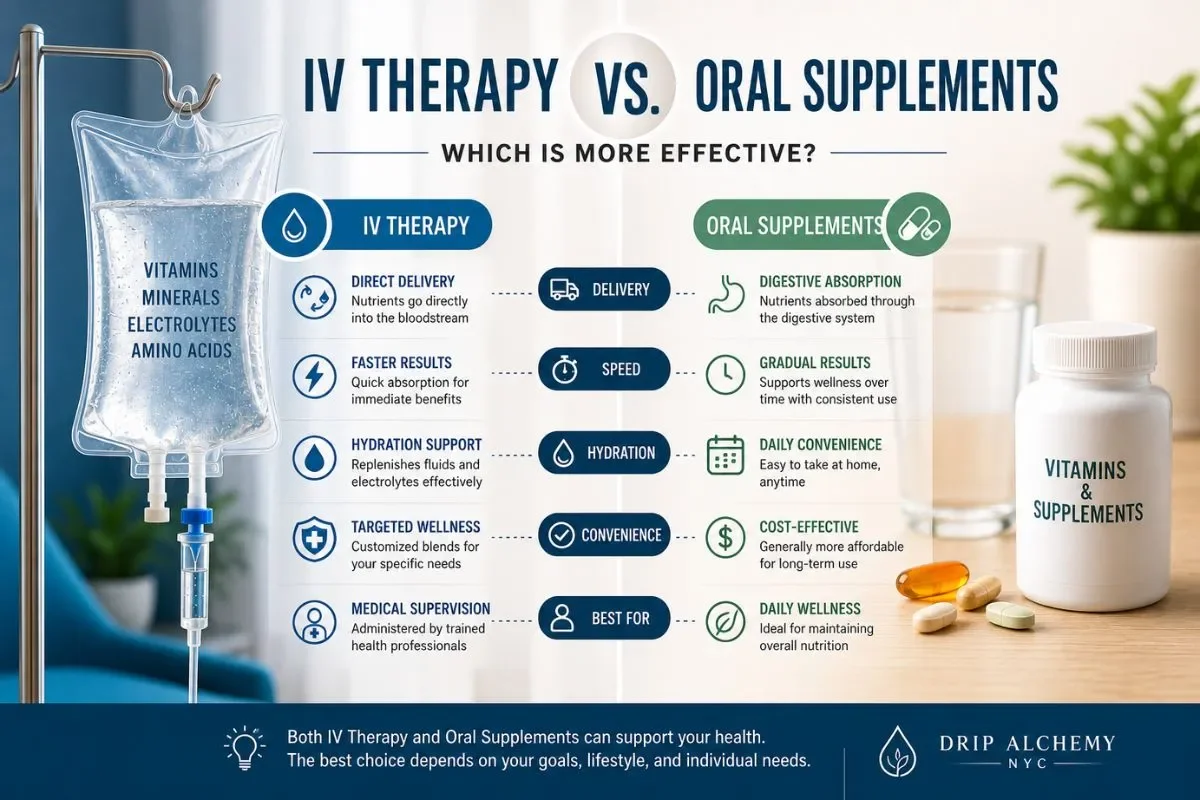
A side-by-side infographic comparing IV therapy and oral supplements, highlighting differences in nutrient absorption, delivery speed, hydration, convenience, cost, and medical supervision.
Understanding the strengths of each option makes it easier to choose the approach that fits your health goals.
1. Nutrient Absorption
One of the biggest differences in IV Therapy Benefits vs Oral Supplements is absorption.
IV therapy bypasses the digestive tract entirely, allowing nutrients to enter the bloodstream directly. This can be beneficial for individuals with gastrointestinal conditions that interfere with nutrient absorption.
Oral vitamins, on the other hand, depend on the digestive system. The amount your body absorbs varies depending on the nutrient, your digestive health, and individual physiology.
For most healthy individuals, oral supplements provide sufficient absorption for maintaining normal vitamin levels. In specific medical situations, healthcare providers may recommend intravenous treatment instead.
2. Speed of Delivery
IV therapy provides nutrients immediately through the bloodstream, making it a faster option when hydration or nutrient replenishment is needed promptly.
Oral supplements work more gradually because digestion and absorption take time.
This difference explains why IV therapy is commonly used in healthcare settings for dehydration and certain medical conditions requiring rapid treatment.
3. IV Hydration
One major advantage of IV therapy is IV hydration.
Unlike oral supplements, IV therapy delivers sterile fluids along with vitamins and electrolytes, helping restore hydration more quickly when appropriate.
People may seek IV hydration after:
Intense physical activity
Heat exposure
Travel
Mild dehydration
Recovery from temporary illness (when appropriate and under professional guidance)
Oral vitamins do not provide hydration, although staying well-hydrated while taking them supports overall health.
4. Convenience
Convenience is another important factor when comparing IV Therapy vs. oral supplements.
Oral vitamins are simple to incorporate into a daily routine. They can be taken at home, carried while traveling, and usually require no medical appointment. For people looking to maintain general wellness, this makes oral supplements a practical long-term solution.
IV therapy requires scheduling an appointment and receiving treatment from trained medical professionals. A typical session lasts between 30 and 60 minutes, depending on the type of infusion. While it takes more time, many people appreciate the personalized approach and the opportunity to receive hydration and nutrients in a single treatment.
If convenience is your top priority, oral supplements are often the easier option. If personalized care and rapid nutrient delivery are more important, IV therapy may be worth considering.
5. Cost
Cost is one of the biggest differences between the two options.
Oral vitamin supplements are generally inexpensive and available in a wide range of formulations. A month's supply often costs much less than a single IV therapy session.
IV therapy involves professional administration, medical-grade ingredients, sterile equipment, and individualized formulations. These factors typically make it a higher-cost wellness service.
Rather than asking which option is cheaper, it's more helpful to ask which one best fits your health needs. Someone managing a diagnosed vitamin deficiency or recovering from dehydration may benefit from a different approach than someone simply looking to support everyday nutrition.
6. Medical Supervision
Another key distinction is the level of professional oversight.
Most oral vitamins can be purchased over the counter and taken independently, although it's still wise to follow recommended dosages and consult a healthcare provider if you have underlying medical conditions.
IV therapy is administered by qualified healthcare professionals who evaluate your health history, symptoms, and wellness goals before recommending an infusion. At Drip Alchemy NYC, treatments are customized to the individual rather than offering the same IV formula to every client.
Medical supervision also helps reduce the risk of receiving nutrients that may not be appropriate for your specific health needs.
When IV Therapy May Be the Better Choice
Although oral vitamins work well for many people, there are situations where IV therapy may offer additional benefits.
Dehydration
One of the most common reasons people seek IV therapy is dehydration.
Because IV fluids enter the bloodstream directly, they can help restore fluid balance more quickly than relying on oral hydration alone in appropriate situations. This is particularly useful when dehydration results from excessive heat, strenuous exercise, travel, or temporary illness.
It's important to remember that severe dehydration requires prompt medical evaluation and treatment.
Vitamin Deficiency Treatment
Some people struggle to maintain healthy vitamin levels despite taking supplements.
Healthcare providers may recommend IV therapy as part of a vitamin deficiency treatment plan when testing confirms deficiencies or when oral supplementation isn't providing the desired results.
Examples may include deficiencies involving:
Vitamin B12
Vitamin C
Certain B vitamins
Magnesium
Treatment recommendations should always be based on professional medical assessment rather than self-diagnosis.
Digestive Disorders That Affect Nutrient Absorption
Certain gastrointestinal conditions can reduce the body's ability to absorb nutrients effectively.
Examples include:
Crohn's disease
Ulcerative colitis
Celiac disease
Short bowel syndrome
Certain bariatric surgery patients
In these situations, healthcare providers may recommend alternatives to oral supplementation depending on the individual's medical condition.
Recovery and Wellness Support
Many people also choose IV therapy during periods of increased physical or mental demand.
Examples include:
Athletic recovery
Busy work schedules
Frequent travel
Jet lag
Recovery after intense exercise
Temporary fatigue associated with dehydration
While research continues in some wellness applications, many individuals appreciate the hydration component and personalized nutrient blends available through providers like Drip Alchemy NYC.
When Oral Vitamins May Be Enough
Despite the growing popularity of IV therapy, oral vitamins remain an excellent choice for many healthy adults.
Daily Wellness
If you eat a balanced diet and have no known absorption issues, oral vitamins can help fill occasional nutritional gaps.
Daily multivitamins and targeted supplements are commonly used to support:
Bone health
Immune function
Heart health
Energy metabolism
General nutrition
For routine wellness, oral supplements often provide an effective and convenient solution.
Long-Term Nutritional Maintenance
Many nutrients are intended to support long-term health rather than produce immediate effects.
Taking oral vitamin supplements consistently over time may help maintain healthy nutrient levels when recommended by your healthcare provider.
Consistency is often more important than choosing the fastest delivery method.
Budget-Friendly Preventive Care
For individuals without medical conditions affecting nutrient absorption, oral supplements generally offer the most economical option.
Combined with:
A nutritious diet
Regular exercise
Quality sleep
Adequate hydration
Routine medical checkups
Oral supplements can play an important role in maintaining overall wellness.
Can You Combine IV Therapy and Oral Supplements?
Yes—in many cases, IV therapy and oral supplements can complement one another rather than compete.
For example, someone may receive an IV infusion for hydration or targeted nutrient support while continuing a daily multivitamin as part of their regular wellness routine.
However, combining therapies should always be done thoughtfully. Taking excessive amounts of certain vitamins or minerals may not provide additional benefits and, in some cases, could increase the risk of side effects.
Before combining treatments, it's best to discuss your supplement routine with a qualified healthcare provider. At Drip Alchemy NYC, clients receive individualized recommendations based on their health history and wellness objectives.
Common Myths About IV Therapy
Myth 1: IV Therapy Is Only for Hospital Patients
While IV therapy has long been used in hospitals, wellness clinics now offer medically supervised IV hydration and vitamin infusions for eligible individuals seeking hydration and nutritional support.
Myth 2: Oral Vitamins Never Work
This isn't true.
For many healthy people, oral vitamin supplements are an effective way to maintain adequate nutrient intake. The best option depends on individual health needs, not on one method being universally superior.
Myth 3: Everyone Needs IV Therapy
IV therapy isn't necessary for everyone.
Many individuals can meet their nutritional needs through a balanced diet and appropriate oral supplementation. IV therapy is one option among many and should be considered based on personal health goals and professional guidance.
Myth 4: More Vitamins Always Mean Better Results
Your body has limits on how it uses and stores nutrients. Taking more vitamins than recommended doesn't necessarily improve health and may even cause unwanted effects in some cases.
Personalized care is always preferable to guessing which nutrients you need.
Why Choose Drip Alchemy NYC for IV Therapy?
Choosing the right provider is just as important as choosing the right treatment. At Drip Alchemy NYC, every IV therapy session is tailored to your unique health goals rather than following a one-size-fits-all approach.
Here's what sets Drip Alchemy NYC apart:
Customized IV vitamin formulations
Experienced medical professionals
High-quality vitamins and nutrients
Personalized wellness consultations
Comfortable treatment environment
Hydration therapies designed around your individual needs
Whether you're looking to support recovery, improve hydration, or address a specific wellness goal, a personalized consultation helps determine which treatment is appropriate for you.
Frequently Asked Questions
Is IV therapy better than oral vitamins?
Not necessarily. IV Therapy vs Oral Supplements isn't about choosing a universal winner. Oral vitamins are effective for many healthy adults, while IV therapy may be appropriate for people who need rapid hydration, have certain nutrient deficiencies, or experience reduced nutrient absorption.
How long do IV therapy benefits last?
The duration varies depending on the type of infusion, your hydration status, metabolism, lifestyle, and overall health. Some people notice benefits for several days, while others may experience longer-lasting effects. Individual results vary.
Can IV therapy treat vitamin deficiencies?
IV therapy may be recommended as part of a vitamin deficiency treatment plan when a healthcare provider determines it's appropriate. Treatment recommendations should be based on medical evaluation and, when necessary, laboratory testing.
Does IV hydration replace drinking water?
No.
IV hydration can provide fluids quickly in certain situations, but it doesn't replace the importance of drinking enough water every day. Good hydration habits remain essential for overall health.
Are oral vitamin supplements effective?
Yes. Oral vitamin supplements remain an effective way to support daily nutrition for many people. Their effectiveness depends on factors such as the specific nutrient, dosage, digestive health, and consistency of use.
Can I take oral vitamins after IV therapy?
In many cases, yes. Many individuals continue taking oral vitamins as part of their daily wellness routine after receiving IV therapy. Always discuss your supplement plan with your healthcare provider to avoid unnecessary or excessive intake.
Is IV therapy safe?
When administered by qualified healthcare professionals using appropriate screening and sterile techniques, IV therapy is generally considered safe for eligible individuals. As with any medical treatment, there are potential risks, so it's important to receive care from a reputable provider.
How often should I receive IV therapy?
There isn't a single schedule that fits everyone. The ideal frequency depends on your health goals, medical history, lifestyle, and recommendations from your healthcare provider.
Final Thoughts
When comparing IV Therapy vs. oral supplements, there's no one-size-fits-all answer. Both options play valuable roles in supporting overall health, but they serve different purposes.
For most healthy individuals, oral vitamin supplements provide a convenient and cost-effective way to maintain daily nutrition. They're easy to incorporate into a routine and are often sufficient when paired with a balanced diet and healthy lifestyle.
IV therapy offers a different advantage by delivering nutrients and fluids directly into the bloodstream. This approach may be beneficial for people seeking rapid IV hydration, those with certain absorption challenges, or individuals following a professionally guided vitamin deficiency treatment plan.
The most effective choice depends on your personal health needs, not simply on which method delivers nutrients faster. A qualified healthcare provider can help determine whether oral supplements, IV therapy, or a combination of both is the right choice for your wellness goals.
If you're ready to take the next step, explore our Vitamin Infusion Therapy & Boosters to discover customized treatments designed to support hydration, energy, immune health, and overall wellness. If you're interested in advanced cellular wellness, learn more about our NAD+ IV Therapy and how it may complement your health goals.
When you're ready to begin your wellness journey, Schedule Your IV Therapy Appointment or Contact Drip Alchemy NYC to speak with our team. We'll help you choose the treatment that's best suited to your individual needs and wellness objectives.
