
Key Takeaways:
VI Peel may help improve post-acne discoloration, uneven tone, and some surface texture concerns.
VI Peel before and after results vary based on acne type, scar depth, pigmentation, and individual skin response.
Flat acne marks usually respond differently from deeper indented acne scars.
Visible peeling is part of the recovery process, but skin improvements may continue after peeling stops.
A professional skin assessment helps determine whether VI Peel is appropriate for your concerns.
Acne can leave behind more than active breakouts. Discoloration, uneven texture, lingering marks, and visible scarring may remain long after blemishes have settled. For people exploring professional skin treatments, VI Peel has become a popular option because it combines controlled exfoliation with a structured recovery process designed to support skin renewal.
Interest in VI Peel before and after results often centers on one question: how much improvement can realistically be expected for acne and acne scars? The answer depends heavily on the type of marks or scars present, overall skin condition, and whether one treatment or a broader plan is more appropriate.
What Is a VI Peel and How Can It Help Acne-Prone Skin?
VI Peel is a professionally applied chemical peel designed to remove damaged surface layers of skin and encourage renewal. Depending on the formulation and treatment goal, it may be used for concerns such as acne, post-inflammatory pigmentation, uneven tone, rough texture, and visible signs of aging.
For acne-prone skin, the treatment may help improve the appearance of congestion, discoloration, and superficial texture changes. It should not, however, be treated as a universal solution for every type of acne scar.
Different scars form at different depths in the skin, which means they do not all respond to chemical exfoliation in the same way.
Drip Alchemy offers aesthetic treatments within a medically supervised setting. Patients considering a VI Peel can also explore the clinic’s Botox and aesthetic treatment options to better understand the broader range of available cosmetic services.
VI Peel Before and After: What Results Can You Expect?
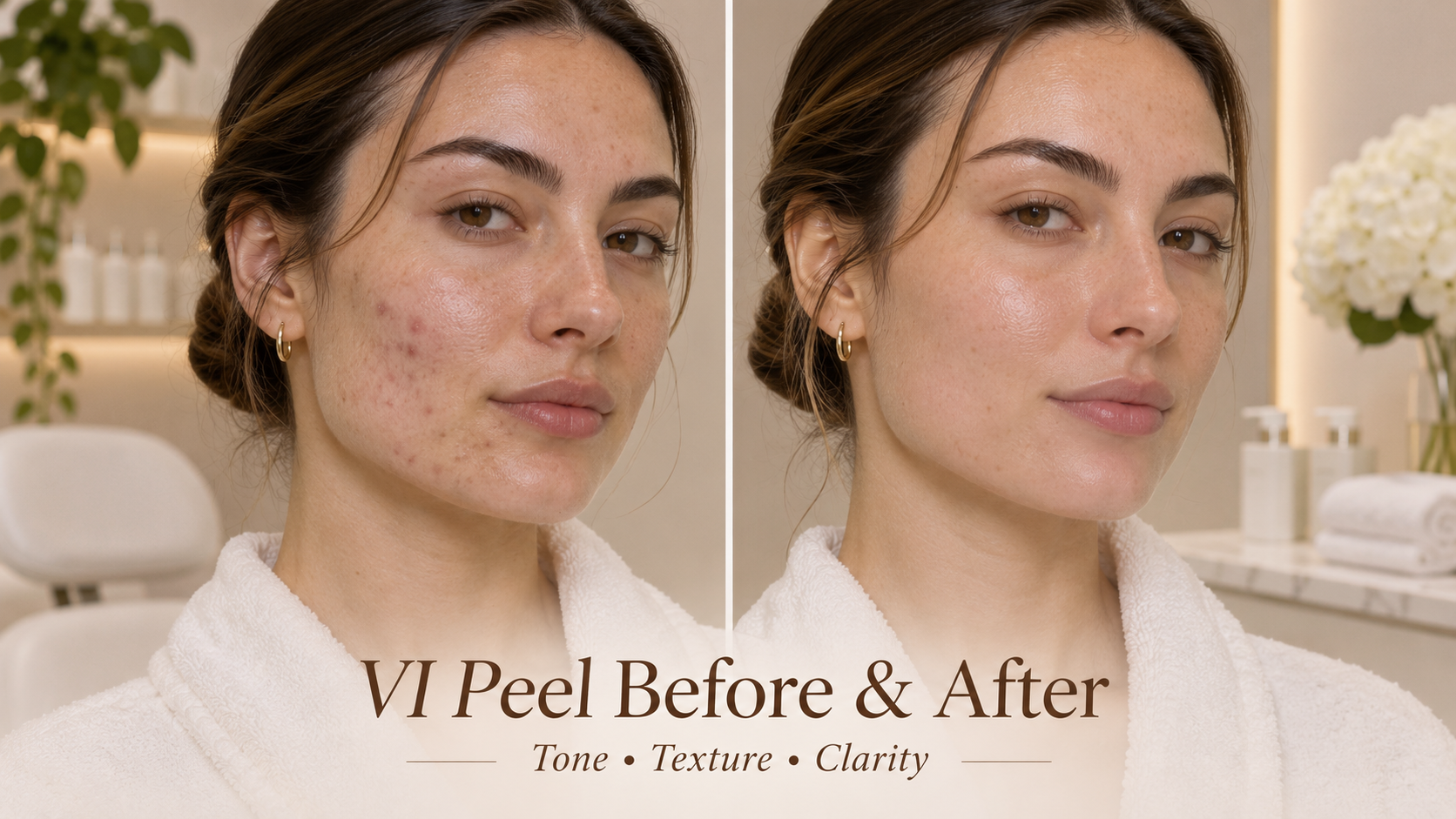
The most noticeable VI Peel before and after changes are generally related to skin tone, surface smoothness, clarity, and the appearance of post-acne discoloration.
Before treatment, acne-prone skin may show:
Dark or red marks left after breakouts
Uneven skin tone
Rough or congested texture
Mild surface irregularities
Active or recently healed blemishes
After the peeling and recovery period, some people may notice brighter-looking skin, a smoother surface, and less noticeable pigmentation.
Results are not immediate. Skin may initially look dry, tight, flaky, or temporarily irritated during the peeling phase. The final appearance should be assessed after the skin has had time to recover.
Another person’s before-and-after photos should also not be used as a guarantee. Skin type, scar depth, pigmentation, treatment history, and healing response all affect the outcome.
Acne Marks and Acne Scars Are Not the Same
One of the most important distinctions is the difference between post-acne marks and true structural scars.
Flat brown, red, or purple marks are often related to inflammation and pigmentation changes after a breakout. These surface-level concerns may respond better to treatments aimed at exfoliation and skin renewal.
Indented acne scars involve structural changes below the surface of the skin.
Examples may include:
Rolling scars
Boxcar scars
Ice-pick scars
These deeper scars may not respond significantly to a peel alone. A more comprehensive treatment strategy may be required depending on their depth and severity.
This distinction is important when evaluating chemical peels for acne scars, because a treatment that improves discoloration may not produce the same improvement in deeper textural scars.
Does VI Peel Work for Acne Scars?
A VI Peel for acne scars may be useful when the main concern involves superficial texture changes, post-inflammatory pigmentation, or marks left behind after acne.
The treatment works primarily at the surface and upper layers of the skin, so its effects depend on where the visible concern is located.
Superficial imperfections may become less noticeable as damaged skin sheds and newer skin becomes visible. Deeper scars are more complex because they involve structural changes that extend below the surface.
For that reason, realistic expectations are essential.
A qualified provider should first assess whether the concern is mainly pigmentation, texture, active acne, or deeper scarring. That evaluation can help determine whether VI Peel is appropriate on its own or should be considered as part of a broader aesthetic plan.
Patients interested in provider qualifications can learn more about the Drip Alchemy medical team.
What Happens After a VI Peel?
The recovery period is an important part of the treatment process.
During the first few days, skin may feel tighter or appear mildly red or dry. Visible peeling can then begin as treated surface layers shed.
The amount of peeling is not identical for everyone.
Some people experience obvious flaking, while others may have a lighter peeling response. More visible peeling does not automatically mean better results.
During recovery, it is important to avoid pulling or picking at loose skin. The skin should be allowed to shed naturally according to the aftercare instructions provided by the treating professional.
Once the peeling period settles, the skin may gradually appear smoother, clearer, and more even in tone.
How Many Chemical Peels Do I Need for Acne Scars?
People frequently ask, how many chemical peels do I need for acne scars?
There is no single number that applies to every patient.
The number of treatments depends on several factors, including:
Type of acne scar
Depth of the scar
Amount of post-acne pigmentation
Active acne
Skin sensitivity
Skin tone
Response to the first treatment
Overall treatment goals
Someone primarily concerned with surface discoloration may notice improvement after an initial treatment, while persistent pigmentation or textural concerns may require additional sessions.
Deeper acne scars may also require a different type of treatment rather than simply increasing the number of chemical peels.
Who May Be a Good Candidate for a VI Peel?
VI Peel may be considered by adults dealing with acne-related discoloration, uneven tone, mild surface texture changes, or other concerns that may respond to controlled chemical exfoliation.
Suitability still needs to be evaluated individually.
A provider may review current skin condition, medications, recent cosmetic procedures, active irritation, sensitivity, and treatment history before recommending a peel.
Professional assessment is particularly important when active acne, pigmentation concerns, or a history of unusual scarring is present.
Drip Alchemy takes an individualized approach to wellness and aesthetic care rather than applying the same treatment plan to every patient.
How to Support Your VI Peel Results

Good aftercare can influence how comfortably the skin recovers.
Patients should follow the specific instructions provided after treatment and generally avoid aggressive exfoliation, picking at peeling skin, and unnecessary irritation during recovery.
Daily sun protection is also important because newly treated skin may be more sensitive to ultraviolet exposure.
A gentle skincare routine, adequate hydration, and consistent follow-up can help support the recovery process.
Results should be judged after the skin has fully settled rather than during the active peeling stage.
Frequently Asked Questions
Does VI Peel help acne scars?
VI Peel may improve post-acne pigmentation, uneven tone, and some superficial texture concerns. Deeper indented scars may respond less noticeably because they involve structural changes beneath the skin’s surface.
What does VI Peel before and after usually look like?
After recovery, skin may appear smoother, brighter, and more even in tone. Dark acne marks or superficial texture may become less noticeable, although results vary between individuals.
How many chemical peels do I need for acne scars?
There is no universal number. Treatment frequency depends on scar type, depth, pigmentation, skin condition, and response to previous treatments. A provider can determine whether repeated peels are appropriate.
Can VI Peel help active acne?
Certain peel approaches may be considered for acne-prone skin, but active breakouts should be assessed first. The severity and type of acne can influence whether treatment is appropriate.
How long does it take to see VI Peel results?
Visible changes may begin after the peeling phase, while improvements in tone and texture can continue developing as the skin recovers. The exact timeline varies by person.
Final Thoughts
VI Peel can be a useful option for people concerned about acne-related discoloration, uneven skin tone, and some superficial texture changes. The most important part of evaluating VI Peel before and after results is understanding that acne marks and deeper acne scars are not the same concern.
Some skin changes may respond well to chemical exfoliation, while deeper scars may require a broader approach.
A personalized assessment can help determine what is realistic for your skin. Patients interested in VI Peel or other aesthetic options can schedule a personalized consultation with Drip Alchemy NYC to discuss their skin concerns and treatment goals.
