
Key Takeaways:
Dysport and Xeomin are both botulinum toxin type A neuromodulators used to soften dynamic facial wrinkles.
Dysport contains accessory proteins, while Xeomin is formulated without those additional proteins.
Dysport tends to diffuse more broadly, while Xeomin is often used when a more purified formulation is preferred.
Both treatments generally provide temporary results that may last around three to four months.
The best option depends on facial anatomy, treatment area, previous injectable experience, and individual aesthetic goals.
Wrinkle-relaxing injectables are no longer limited to one well-known option. Many patients now compare Xeomin vs Dysport when deciding which treatment may better suit their facial movement, wrinkle pattern, and aesthetic goals.
Both treatments are neuromodulators. They temporarily reduce nerve signals to selected facial muscles, helping soften lines caused by repeated expressions such as frowning, squinting, or raising the eyebrows.
Although they work in a similar way, Dysport and Xeomin are not identical. Their formulation, diffusion, onset, and individual response can differ, which is why treatment selection should be based on more than brand preference alone.
What Are Dysport and Xeomin?
Dysport and Xeomin are injectable treatments made with botulinum toxin type A. They temporarily limit communication between nerves and targeted muscles, reducing the muscle contractions that contribute to dynamic facial lines.
Dynamic wrinkles are the lines that become more noticeable when you make expressions. Common examples include frown lines between the eyebrows, forehead creases, and lines around the eyes.
Both products belong to the same general treatment category as Botox treatments. However, their formulations are different, and that can influence how a provider chooses to use them.
The goal is not necessarily to eliminate all facial movement. A carefully planned treatment aims to soften unwanted lines while maintaining a natural and balanced appearance.
What Is Dysport and What Is It Used For?
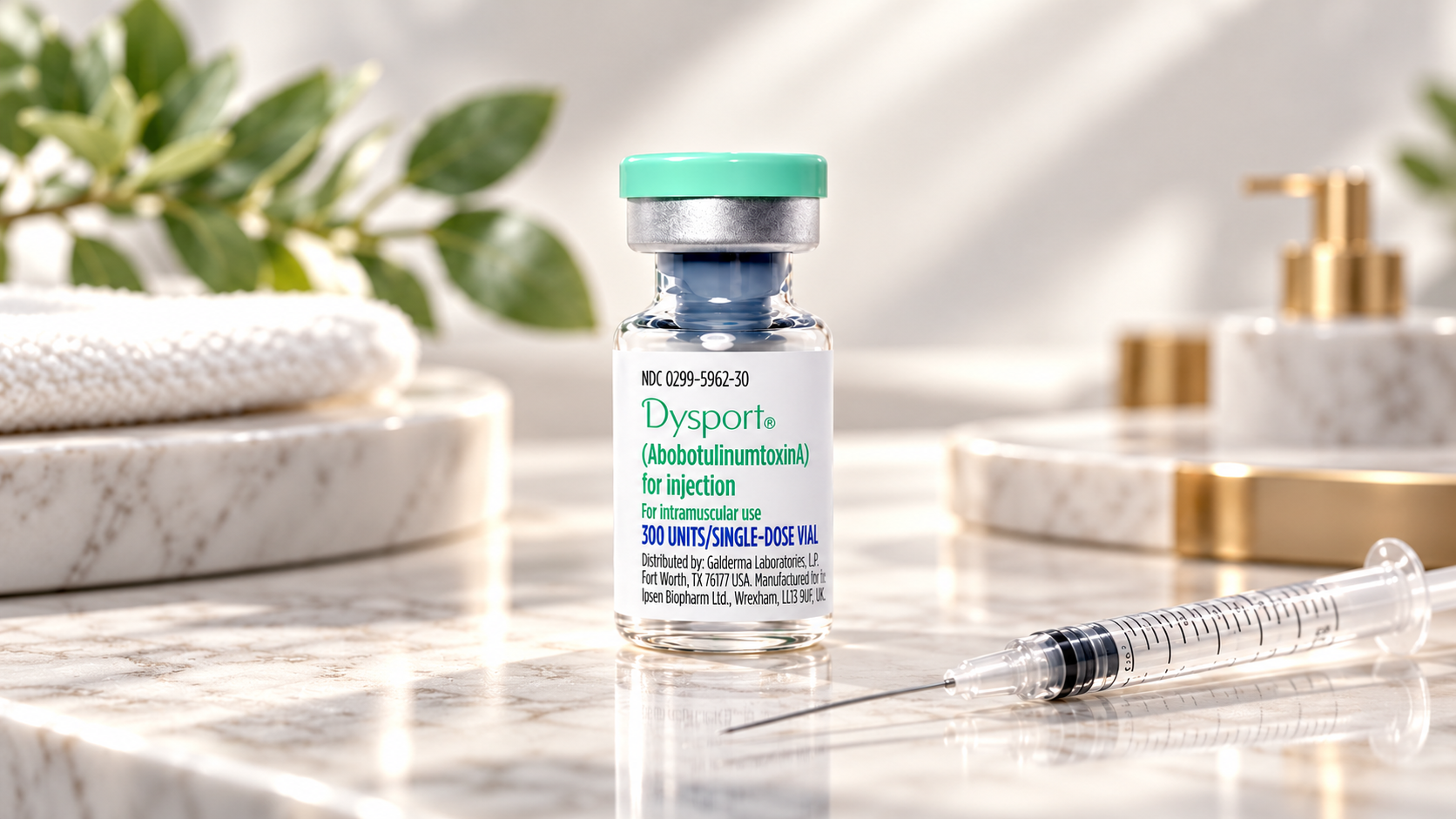
For anyone asking what is Dysport, it is a botulinum toxin type A injectable designed to temporarily reduce activity in selected muscles.
In aesthetic medicine, Dysport for wrinkles is primarily associated with dynamic facial lines created by repeated muscle contractions. A provider may consider it for concerns such as frown lines or forehead lines, depending on the treatment area and individual anatomy.
One characteristic that distinguishes Dysport is its diffusion profile. It tends to spread more broadly after injection than some other neuromodulators.
That broader spread may be useful when treating a larger area, such as parts of the forehead. However, greater diffusion is not automatically better for every patient or every treatment area.
When considering what is Dysport used for, the treatment plan should always be based on facial movement, muscle strength, and the provider's assessment rather than simply choosing a product because it is popular.
What Is a Dysport Treatment Like?
A Dysport treatment usually begins with a consultation. Your provider reviews your medical history, previous injectable treatments, areas of concern, and the type of result you want to achieve.
They may ask you to frown, smile, squint, or raise your eyebrows. Watching these movements helps the provider understand which muscles are contributing most to the lines you want to soften.
The treatment area is then cleaned, and small amounts of Dysport are injected into carefully selected muscles with a fine needle.
The injection process is typically brief. Most people can return to their usual routine afterward, although temporary redness, tenderness, swelling, or bruising may occur around the injection sites.
Xeomin vs Dysport: What Are the Main Differences?
The main differences in Xeomin vs Dysport involve their formulation, diffusion, onset, and how an individual responds to treatment.
Dysport: Uses botulinum toxin type A with accessory proteins. It tends to spread more broadly, may start working relatively quickly, and typically lasts around 3–4 months.
Xeomin: Also uses botulinum toxin type A but does not include accessory proteins. It is often considered more localized, may take several days to show results, and usually lasts around 3–4 months.
Formulation
One of the clearest differences is how the products are formulated. Dysport contains accessory proteins alongside the active botulinum toxin.
Xeomin is formulated without those accessory proteins. For this reason, it is sometimes referred to as a purified or “naked” neuromodulator.
This does not mean Xeomin is automatically better or safer. It simply gives providers another option when deciding which formulation may be appropriate for a particular patient.
Diffusion
Dysport generally has a wider diffusion profile. This means the effect may spread across a somewhat broader area after injection.
That can be useful when a provider wants to address muscle activity across a larger treatment area. Xeomin may be selected when a more localized approach better matches the treatment plan.
The ideal amount of spread depends on the area being treated. Too much or too little diffusion may affect the final result, which makes injection technique especially important.
Does Dysport Work Faster Than Xeomin?
Dysport is often associated with a relatively quick onset. Some patients may begin noticing a reduction in muscle movement within a few days.
Xeomin also begins working gradually, although the timing of visible changes can vary. Neither treatment should be judged based on the first day or two after an appointment.
The full effect of a neuromodulator usually develops over time as nerve signaling to the treated muscle is reduced.
Individual response matters. Metabolism, muscle strength, treatment area, and dose can all influence how quickly a patient notices a change.
How Long Do Dysport and Xeomin Results Last?
Dysport and Xeomin commonly provide results that last around three to four months for many patients.
However, the exact duration is different for everyone. One person may notice movement returning sooner, while another may maintain their result for longer.
Factors that can influence longevity include:
metabolism
muscle strength
treatment area
dose
previous treatment history
individual response to the product
There is no reliable rule that one of these products always lasts longer than the other.
Many of the same factors also influence Botox longevity. You can learn more in our guide to how long Botox lasts and what can affect the results.
Which Areas Can Dysport and Xeomin Treat?

Neuromodulators are primarily used to address wrinkles caused by repeated facial muscle movement.
Depending on the product, treatment plan, and provider assessment, areas may include frown lines between the eyebrows, forehead lines, and certain lines around the eyes.
The right product can vary even when two patients have concerns in the same area. Muscle strength, brow position, facial proportions, and natural movement patterns all affect treatment planning.
This is why choosing between Dysport and Xeomin involves more than deciding which product sounds better.
If you want to understand how neuromodulators affect expression lines more broadly, Drip Alchemy's guide to Botox for fine lines and wrinkles explains how repeated muscle activity contributes to visible facial lines.
Dysport vs Xeomin: Which One Is Better for Wrinkles?
Neither Dysport nor Xeomin is universally better for wrinkles.
Dysport may be considered when a provider wants broader diffusion across a larger area. Some patients may also prefer its onset or the way they have responded to it during previous treatments.
Xeomin may be considered when a purified formulation without accessory proteins is preferred. A provider may also discuss it with someone whose previous experience with other neuromodulators has changed over time.
The decision should take into account:
facial anatomy
muscle movement
wrinkle location
muscle strength
previous injectable treatments
desired amount of remaining movement
personal aesthetic goals
The product is only one part of the result. Precise assessment, placement, and dosing are equally important.
Is There Downtime After Dysport or Xeomin?
Both Dysport and Xeomin generally involve little to no significant downtime.
Some people experience mild redness, tenderness, swelling, or bruising where the injections were placed. These effects are typically temporary.
Patients are usually advised to avoid rubbing or aggressively massaging treated areas immediately after treatment. Your provider may also give instructions about exercise and other activities for the hours following your appointment.
Always follow the specific aftercare recommendations from the clinician who treated you.
For more general guidance on caring for a treated area after a neuromodulator appointment, read our Botox aftercare dos and don'ts.
Why Does Injector Experience Matter?
The skill of the injector plays a major role in neuromodulator results.
Facial muscles do not work independently. Treating one group of muscles can affect the balance and movement of nearby areas, which is why a provider should evaluate your face both at rest and during expression.
An experienced medical provider considers factors such as brow position, muscle strength, symmetry, and how much natural movement you want to maintain.
Treatment should therefore be personalized rather than based on a standard injection pattern for everyone.
Drip Alchemy's licensed medical team takes an individualized approach to aesthetic care, with treatment planning based on each patient's anatomy, concerns, and goals.
FAQs
Is Xeomin Better Than Dysport?
Neither treatment is automatically better. Dysport may be preferred when broader diffusion is useful, while Xeomin may be chosen for its purified formulation. Your facial anatomy, treatment history, muscle strength, and aesthetic goals should guide the decision with a qualified medical provider.
Which Works Faster, Dysport or Xeomin?
Dysport is often associated with a relatively fast onset, although individual response varies. Xeomin also begins working within several days for many patients. The complete effect of either treatment can take longer to develop, so early results should not be considered final.
How Long Do Dysport and Xeomin Last?
Both treatments commonly last around three to four months. Duration depends on factors such as metabolism, muscle strength, dose, treatment area, and previous injectable history. Some patients may find that one product lasts slightly longer for them than another.
What Is Dysport Used For?
Dysport is used to temporarily reduce targeted muscle activity. In cosmetic treatment, it is commonly used for dynamic wrinkles caused by repeated facial expressions, including certain frown lines and forehead lines when appropriate for the patient's anatomy and treatment plan.
What Is a Dysport Treatment?
A Dysport treatment usually includes a consultation, facial movement assessment, cleansing of the treatment area, and small injections into selected muscles. The procedure is typically brief and usually requires little downtime, although temporary redness, swelling, tenderness, or bruising can occur.
Final Thoughts
The main differences in Xeomin vs Dysport come down to formulation, diffusion, onset, and individual treatment response.
Both are neuromodulators designed to temporarily soften dynamic wrinkles, but the right choice depends on more than the product name. Facial anatomy, muscle activity, previous injectable experience, and your desired result all matter.
A consultation with a qualified medical provider can help determine whether a neuromodulator is appropriate and which treatment approach best fits your goals.
