
What Are NAD+ Injections? Benefits, Cost, Safety, and What to Expect
NAD+ has moved from a niche longevity supplement into one of the most requested treatments at wellness clinics, but a lot of people booking their first session still aren't entirely sure what they're getting. This guide covers what NAD+ actually is, what an injection involves, realistic cost expectations, potential side effects, and how to use NAD+ as part of an ongoing wellness routine, so you can walk into a consultation with a clear picture instead of just marketing language.
What Is NAD+
NAD+, or nicotinamide adenine dinucleotide, is a coenzyme found in every cell of the human body, where it plays a central role in converting food into cellular energy. According to research summarized by the National Institute on Aging, part of the National Institutes of Health, NAD+ levels decline naturally with age, and this decline has been linked in animal studies to reduced mitochondrial function and slower cellular repair.
That research is part of why NAD+ has drawn attention from the longevity and wellness space, though it's worth being clear that most of the more dramatic claims about reversing aging come from preclinical or animal research, not confirmed human clinical outcomes.
What Is an NAD Injection
An NAD injection delivers the coenzyme directly into the body, most commonly through a slow intravenous infusion, a subcutaneous self-injection, or a nasal spray, bypassing the digestive system where oral NAD+ precursors are broken down before they're absorbed. IV administration is generally considered the most direct route, since it allows NAD+ to enter the bloodstream without being filtered through the gut first.
Subcutaneous self-injections are a lower-dose, more frequent alternative that many clients use for at-home maintenance between in-clinic IV sessions.
What Are NAD Injections Used For
People typically pursue NAD+ therapy for a handful of reasons: mental clarity and focus, physical energy and recovery, and general support for cellular aging processes. Some clients also use it as part of a broader recovery protocol after periods of high stress, poor sleep, or substance use, since NAD+ is involved in metabolic pathways that support liver function and cellular repair. It's important to set realistic expectations here.
NAD+ therapy is not an FDA-approved treatment for any specific medical condition, and claims about dramatic anti-aging or addiction-recovery outcomes should be treated with appropriate skepticism until backed by larger, well-controlled human trials.
How to Use NAD Plus Effectively
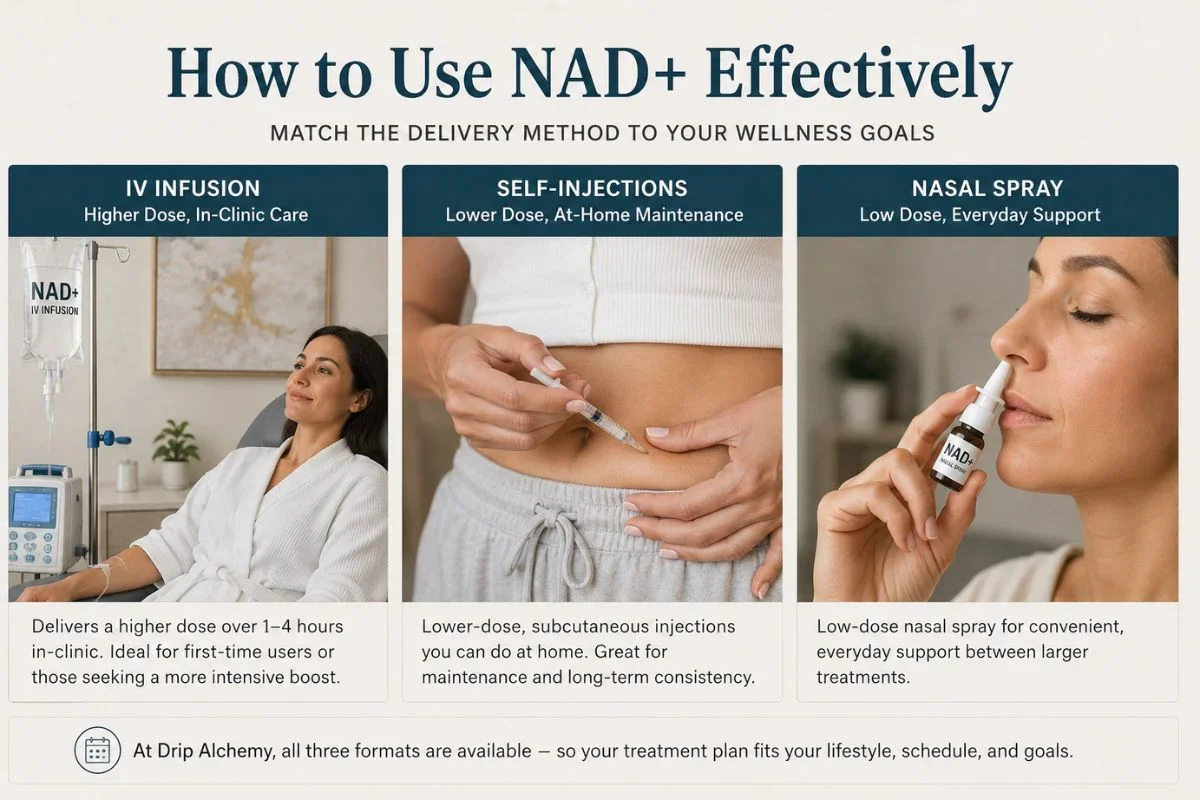
NAD+ therapy comparison showing IV infusion, self-injection kit, and nasal spray as three delivery options for wellness treatment.
Understanding how to use NAD+ effectively starts with matching the delivery method to the goal. An IV infusion delivers a larger dose over a longer session, typically one to four hours depending on concentration, and tends to be the preferred starting point for people new to NAD+ therapy who want to gauge how their body responds.
Once a baseline response is established, many clients transition to lower-dose subcutaneous self-injections for maintenance, since these can be done more frequently without requiring a clinic visit each time. A nasal spray option exists as well, offering a lower-dose, more convenient format for ongoing support between larger sessions.
At Drip Alchemy, all three formats are available, including NAD+ IV infusions, NAD+ self-injections, and NAD+ nasal spray, so treatment plans can be built around what actually fits a client's schedule and tolerance.
NAD+ Injections Cost Per Month
Cost is one of the most common questions clients ask before starting treatment, and it varies significantly based on dose, frequency, and delivery method. A single in-clinic NAD+ IV session generally costs more per visit than a self-injection kit, but self-injections are typically administered more frequently, which can bring the effective monthly cost closer together depending on the protocol.
For clients asking how much NAD injections are likely to run on an ongoing basis, a maintenance plan combining periodic IV sessions with at-home self-injections is often more cost-effective over several months than relying exclusively on in-clinic infusions. Clinics offering a membership option can also meaningfully reduce the per-session cost for clients planning to use NAD+ therapy consistently rather than as a one-time treatment.
As a general reference point, NAD+ IV sessions are commonly tiered by dose, with lower-dose sessions priced in the low hundreds and higher-dose sessions, often paired with multi-vitamins and glutathione, running several hundred dollars more per visit. A licensed provider can walk you through exactly which tier makes sense for your goals during a consultation rather than guessing based on price alone.
NAD Plus Injection Side Effects
NAD+ injection side effects are generally mild but worth knowing before your first session. The most commonly reported side effect during IV administration is a temporary sensation of tightness in the chest, flushing, or nausea if the infusion rate is too fast, which is why a slower drip rate is standard practice for a client's first session. Headache and mild fatigue in the hours following treatment are also reported occasionally.
Subcutaneous self-injections carry a lower risk of these infusion-related side effects but can cause localized redness or irritation at the injection site. Serious adverse events are rare when NAD+ is administered by a licensed provider using a pharmaceutical-grade product, but as with any IV or injectable therapy, a proper intake screening matters, since NAD+ isn't appropriate for everyone, including people with certain cardiovascular conditions.
Choosing a Provider for NAD+ Therapy
Not all NAD+ products are the same, and sourcing matters more than most first-time clients realize. NAD+ obtained from an FDA-registered 503A or 503B compounding pharmacy, prepared under USP 797 sterile compounding standards, carries meaningfully less risk than product from an unregulated or undisclosed source.
A licensed provider should also be willing to walk through your health history, current medications, and goals before recommending a dose or frequency, rather than offering a one-size-fits-all protocol regardless of what you're trying to achieve.
Getting Started With NAD+ Therapy
NAD+ therapy isn't a quick fix, and anyone promising dramatic overnight results is overselling it, but for clients looking for a medically supervised way to support energy, mental clarity, and long-term cellular health, it can be a reasonable addition to a broader wellness routine.
The most important factors are provider experience, ingredient sourcing, and a treatment plan built around your actual goals rather than a generic package. If you're weighing your options between an IV infusion, self-injection, or nasal spray, booking a consultation with Drip Alchemy's licensed medical team is the most reliable way to figure out which format and frequency actually make sense for you.
Frequently Asked Questions
What is an NAD injection typically used for?
Most clients pursue NAD+ injections for mental clarity, physical energy, and general cellular health support, though it's not an FDA-approved treatment for any specific diagnosis and results vary by individual.
How much are NAD injections on average per session?
Pricing varies by clinic, dose, and delivery method, with in-clinic IV sessions typically priced higher per visit than at-home self-injection kits; a consultation is the most reliable way to get an accurate cost for your specific goals.
Are there noticeable NAD+ injection side effects during treatment?
Some clients experience mild flushing, chest tightness, or nausea during a fast IV infusion, which is why providers typically start with a slower drip rate, especially for a first-time session.
How long do the effects of an NAD+ injection last?
Effects vary by delivery method and individual metabolism, but many clients report noticeable improvements in energy or focus for several days to about a week after an IV session, while subcutaneous self-injections tend to produce a milder, more gradual effect that builds with consistent use over several weeks.
Can you combine NAD+ IV sessions with at-home self-injections?
Yes, many providers build a maintenance plan that pairs periodic in-clinic IV sessions with lower-dose self-injections in between, which can help sustain elevated NAD+ levels more consistently than relying on infrequent IV visits alone. This combination should always be set up through a licensed provider rather than self-directed, since dosing and frequency need to be tailored to your individual response.
