
Glutathione IV Drip: What It Actually Does for Skin and Energy
Glutathione has become one of the most requested add-ons in IV wellness clinics across the country, but a lot of what circulates online about it is exaggerated or oversimplified. A glutathione IV is not a miracle skin treatment, and it's not a substitute for sleep, hydration, or a balanced diet, but it does have a specific, well-documented role in the body worth understanding before you book a session. This guide walks through what glutathione actually does, what a glutathione IV drip can realistically offer, and what to expect if you're considering one.
What Is Glutathione
Glutathione is a small molecule made from three amino acids, cysteine, glutamine, and glycine, and it's produced naturally by nearly every cell in the human body. According to the National Institutes of Health, glutathione functions as one of the body's primary antioxidants, helping neutralize free radicals and support the liver's detoxification processes.
Levels of glutathione tend to decline with age, and factors like poor diet, chronic stress, alcohol use, and environmental toxin exposure can deplete it further, which is part of why interest in supplementation, oral or intravenous, has grown.
What Is Glutathione IV Used For
When people ask what glutathione IV is used for, the answer usually falls into two categories: antioxidant support and skin appearance. On the antioxidant side, intravenous delivery bypasses digestion entirely, which matters because oral glutathione is broken down significantly in the gut before it reaches the bloodstream. Delivering it directly into the vein allows for a much higher percentage of the compound to remain bioavailable, at least temporarily, compared to a capsule or tablet.
On the skin side, glutathione plays a role in melanin production. The body produces two types of melanin, eumelanin, which is darker, and pheomelanin, which is lighter, and research published through the National Center for Biotechnology Information's PubMed database has explored glutathione's potential to shift melanin production toward the lighter pheomelanin pathway. This is the mechanism behind marketing terms like "skin lightening IV" or "glutathione IV" for skin whitening, though it's worth noting that clinical evidence on the degree and consistency of this effect is still limited, and results vary significantly from person to person based on genetics, dose, and treatment frequency.
Glutathione IV Benefits Worth Understanding
The most commonly cited glutathione IV benefits fall into a few categories. Antioxidant support is the most consistently documented effect, since glutathione directly participates in neutralizing oxidative stress at the cellular level. Liver support is another area of interest, since glutathione plays a documented role in phase II liver detoxification pathways. Skin tone and clarity are the benefits most associated with a glutathione drip in aesthetic settings, with some clients reporting a brighter, more even complexion after a series of sessions, though this tends to be gradual rather than immediate.
Energy is a benefit people frequently associate with a glutathione IV treatment, though it's more indirect than direct. Glutathione doesn't function as a stimulant the way caffeine or B12 does. Instead, any perceived energy improvement is more likely tied to reduced oxidative stress and improved cellular function over time, combined with the hydration that comes from any IV infusion. Clients looking specifically for an energy boost are often better served pairing a glutathione drip with a B-complex vitamin infusion rather than expecting glutathione alone to deliver a noticeable lift.
What a Gluta IV Drip Session Actually Involves
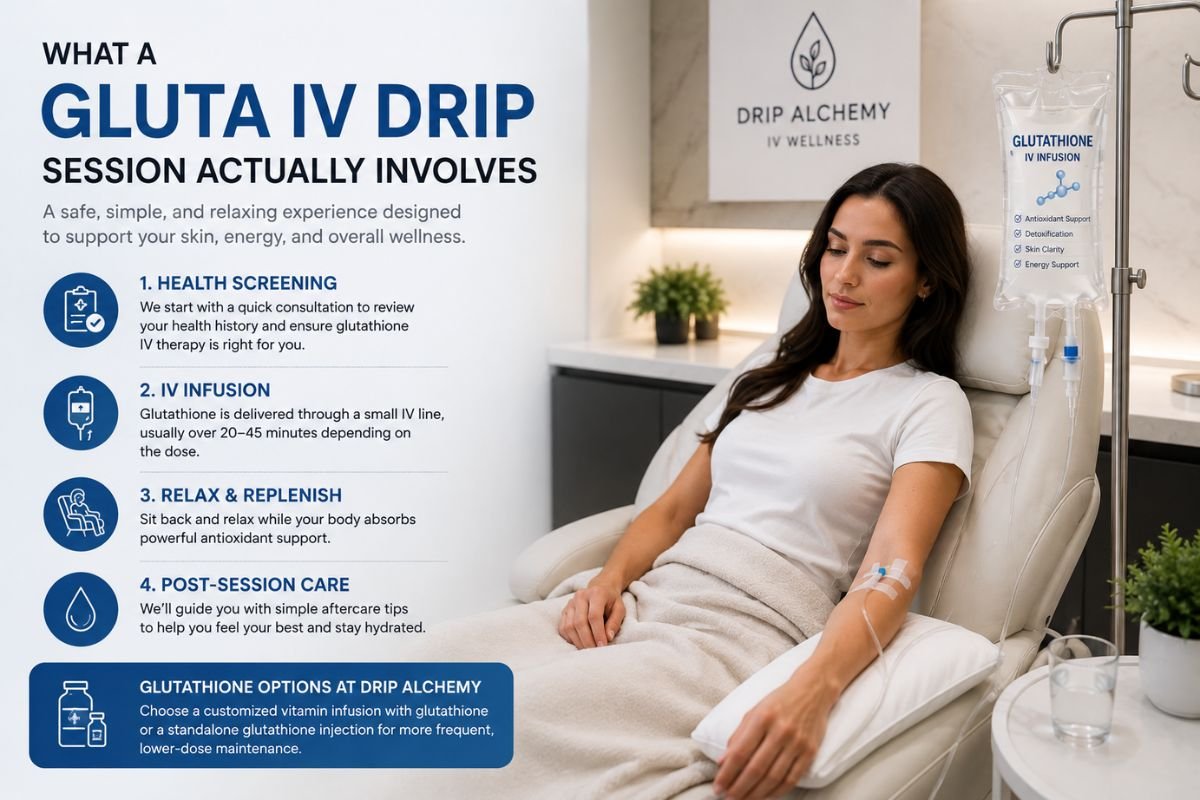
Glutathione IV drip session in a wellness clinic, showing a woman receiving an IV infusion with steps for health screening, treatment, relaxation, and post-session care.
A typical gluta IV drip session starts with a brief health screening to rule out contraindications, since glutathione IV therapy isn't appropriate for everyone, including people with certain kidney conditions or asthma, which can in rare cases be aggravated by glutathione administration. Once cleared, the infusion itself is administered through a small IV line, usually over 20 to 45 minutes depending on the dose.
Some clinics offer glutathione as a standalone treatment, while others combine it with a broader vitamin infusion for a more comprehensive session. At Drip Alchemy, glutathione is available both as part of a customizedvitamin infusion therapy session and as a standaloneglutathione injection option for clients who want a more frequent, lower-dose maintenance approach.
Glutathione and NAD+: A Common Pairing
Glutathione is rarely used in isolation at most clinics, and it's often bundled with other infusions rather than sold purely as a standalone antioxidant push. At Drip Alchemy, glutathione is included as a standard component across all threeNAD+ IV tiers, since the antioxidant support it provides complements NAD+'s role in cellular energy production. If you're curious how the two compare or work together. Our companion guide onwhat NAD+ injections are covers that pairing in more depth.
How Often Should You Get a Glutathione IV Treatment
Frequency depends on the goal. Clients focused primarily on antioxidant support and general wellness often do well with a session every two to four weeks. Clients pursuing visible changes in skin tone typically need a more consistent schedule, often weekly or biweekly for the first several sessions, since melanin-related changes accumulate gradually rather than appearing after a single treatment. It's worth noting that once a treatment schedule is paused, any skin tone changes are not necessarily permanent, since melanin production tends to return to baseline over time without continued support.
Is a Glutathione Drip Safe
Glutathione IV therapy is generally well tolerated when administered by a licensed medical provider using pharmaceutical-grade ingredients from a properly regulated compounding pharmacy. That said, the FDA has not evaluated glutathione IV therapy for cosmetic use, and it's important to understand that these treatments are considered elective and investigational rather than a standard, FDA-approved medical intervention.
Choosing a provider who sources from an FDA-registered 503A or 503B compounding pharmacy, and who follows USP 797 sterile compounding standards, meaningfully reduces the risk associated with contamination or improper dosing, which are the primary safety concerns with IV therapy in general.
Frequently Asked Questions
What is glutathione IV used for besides skin tone?
Beyond its association with skin brightening, glutathione IV is most commonly used for general antioxidant support and to support the liver's natural detoxification pathways, particularly for people with high oxidative stress from lifestyle or environmental factors.
How many sessions does a glutathione drip take to show results?
Most clients pursuing skin tone changes need multiple sessions, often six to ten spaced over several weeks, before noticing a visible difference, since melanin regulation happens gradually rather than after one treatment.
Is glutathione IV treatment the same as a skin-lightening injection?
They're related but not identical. A glutathione IV treatment delivers the compound intravenously in a clinical setting, while some skin-lightening injections use lower, more frequent doses administered separately; both work through the same underlying mechanism but differ in delivery method and dosing schedule.
How is a glutathione drip different from an oral supplement?
Oral glutathione is broken down significantly by digestive enzymes before it reaches the bloodstream, which limits how much actually stays active in the body. A glutathione drip bypasses digestion entirely, delivering the compound directly into the vein, which is why IV administration is generally considered more effective for raising blood levels, at least in the short term following treatment.
Who should avoid a glutathione IV treatment?
Glutathione IV therapy isn't recommended for everyone. People with certain kidney conditions, asthma, or a known sensitivity to sulfur-containing compounds should talk to a licensed provider before starting treatment, since glutathione can in rare cases trigger bronchospasm or other reactions in sensitive individuals. A proper intake screening before your first session is the best way to rule out contraindications.
Making an Informed Decision
A glutathione IV drip isn't a shortcut, and it isn't magic, but for the right person, it can be a reasonable, medically supervised way to support antioxidant levels and, with consistency, potentially influence skin tone over time. What matters most is choosing a provider who's transparent about sourcing, dosing, and realistic timelines rather than one promising instant results. If you're considering a glutathione IV, glutathione drip, or a broader wellness infusion plan,scheduling a consultation with a licensed provider at Drip Alchemy is the best way to get a treatment plan tailored to your health history and goals rather than a generic protocol.
