
Key Takeaways: Biotin Injection
Biotin injection benefits are most meaningful when low biotin or a true deficiency is contributing to symptoms.
Biotin supports normal metabolic processes and plays a role in hair, skin and nail health.
A biotin injection for hair loss is not a universal solution because thinning hair can have many different causes.
Results are usually gradual, and dosage or frequency should be personalized by a qualified provider.
High biotin intake can interfere with certain laboratory tests, so clinicians should always know when biotin is being used.
Biotin has become closely associated with stronger hair, healthier-looking skin and less brittle nails. That connection has made vitamin B7 injections increasingly popular among people looking for a more direct form of supplementation.
The science, however, is more specific than the marketing often suggests. Biotin is essential to normal health, but the strongest biotin injection benefits are generally seen when someone is actually deficient or has another reason for inadequate biotin status. Pasted text
Hair thinning, dry skin and weak nails can also have causes unrelated to biotin. A thoughtful approach therefore starts with understanding what biotin does, what injections can realistically achieve and when another explanation should be investigated.
What Is Biotin and What Does It Do?
Biotin, also known as vitamin B7, is a water-soluble B vitamin involved in several metabolic processes.
It acts as a cofactor for enzymes that help the body process fats, carbohydrates and amino acids. These functions support normal cellular activity throughout the body.
A true deficiency can show up in tissues such as hair, skin and nails. Reported signs may include thinning hair, brittle nails and skin changes.
Biotin deficiency is considered uncommon, though certain health conditions, medications, dietary patterns or absorption problems may increase risk.
What Are Biotin Injections?
Biotin injections deliver vitamin B7 into the body through an injection, typically into muscle.
This route bypasses the digestive tract, unlike oral tablets or capsules. That distinction is one reason some people become interested in injectable biotin.
However, bypassing digestion does not automatically mean injections produce better hair or nail results.
Protocol Health notes that oral biotin is generally absorbed well and that there is no clear evidence showing injections outperform oral biotin for cosmetic hair or nail outcomes.
The best route depends on the person's health history, nutritional status and treatment goals.
What Are the Potential Benefits of Biotin Injections?

The most common reasons people explore biotin injections involve hair, skin and nails.
In people with low biotin, correcting that deficiency may support healthier hair quality, stronger nails and improvement in deficiency-related skin changes.
The key phrase is when biotin is actually low.
People whose levels are already sufficient may not experience a dramatic cosmetic change from receiving additional biotin.
Do Biotin Injections Help With Hair Loss?
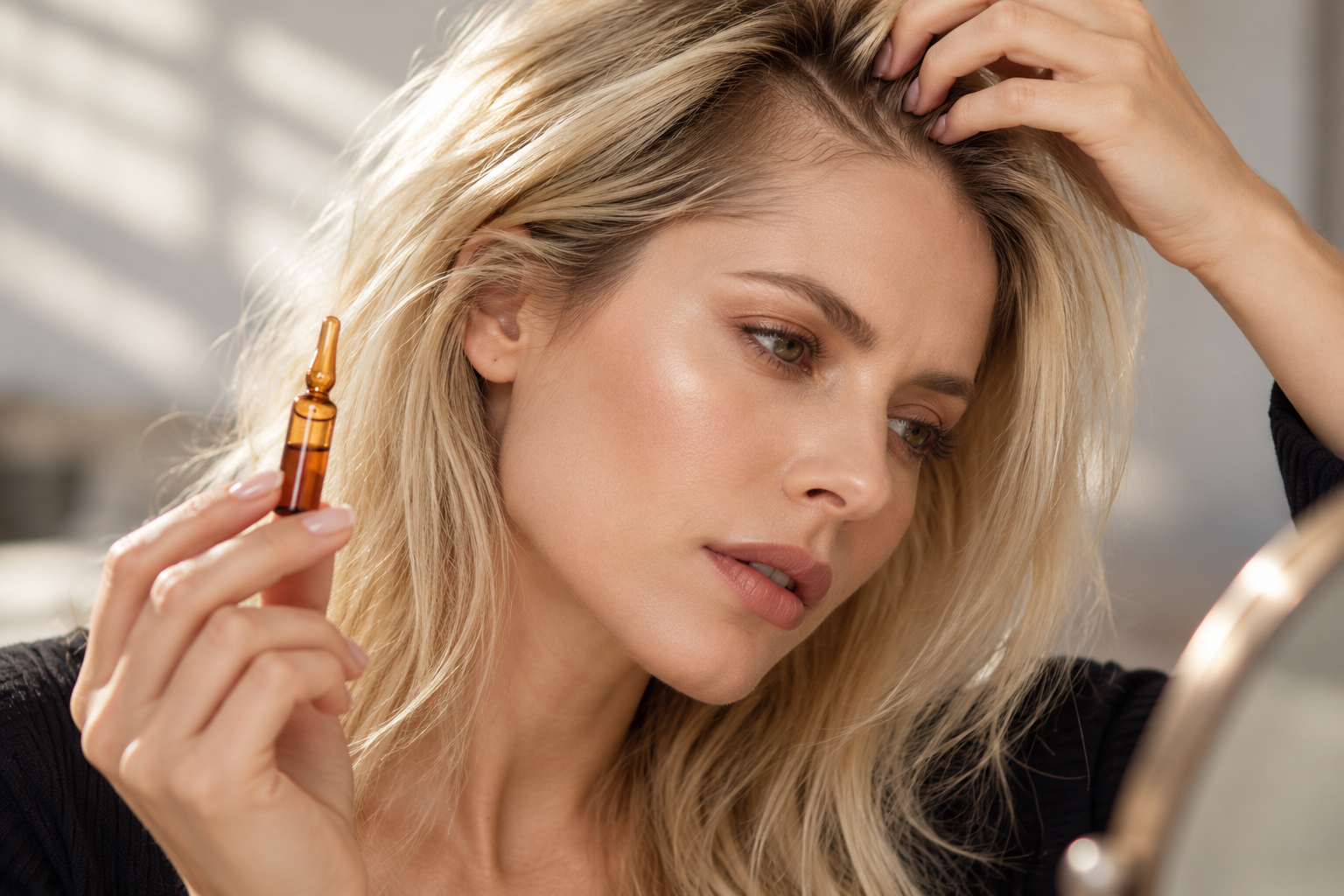
A biotin injection for hair loss may be useful when biotin deficiency is genuinely contributing to hair shedding or poor hair quality.
Biotin is associated with normal keratin-related processes, but hair loss is complicated. It can also be influenced by thyroid disorders, iron deficiency, hormonal changes, genetics, stress and postpartum shedding.
That means treating every case of thinning hair with biotin can miss the real cause.
A proper assessment is more useful than assuming that hair loss automatically means low biotin.
Can Biotin Support Skin Health?
Biotin contributes to metabolic pathways involved in normal skin function.
A true deficiency can sometimes appear as dry, scaly or irritated skin. In that situation, correcting the deficiency may help improve those symptoms.
That does not mean biotin injections should be viewed as a universal treatment for dullness, acne, eczema or visible skin aging.
Those concerns can have many different causes and may require a different approach.
For people focused more broadly on skin-focused nutrient support, Drip Alchemy also offers information on Vitamin Therapy, Infusions & Boosters.
Can Biotin Help Strengthen Brittle Nails?
Brittle or splitting nails are another reason people look into biotin supplementation.
When low biotin is contributing to poor nail quality, restoring adequate levels may support stronger nail growth over time.
Nail changes are usually gradual because the nail plate grows slowly. This is why treatment results should not be judged after only a few days.
Other causes of brittle nails should also be considered, especially if the problem continues despite adequate nutrition and appropriate supplementation.
Biotin is one possible factor, not the only explanation.
How Fast Does Biotin Work?
People searching how fast does biotin work should expect gradual rather than immediate changes.
Hair, skin and nails all grow and renew at different rates. Nail changes may become visible sooner because new nail growth is easier to track.
Hair often takes longer because each strand follows a slow growth cycle.
Oral Biotin vs Biotin Injections
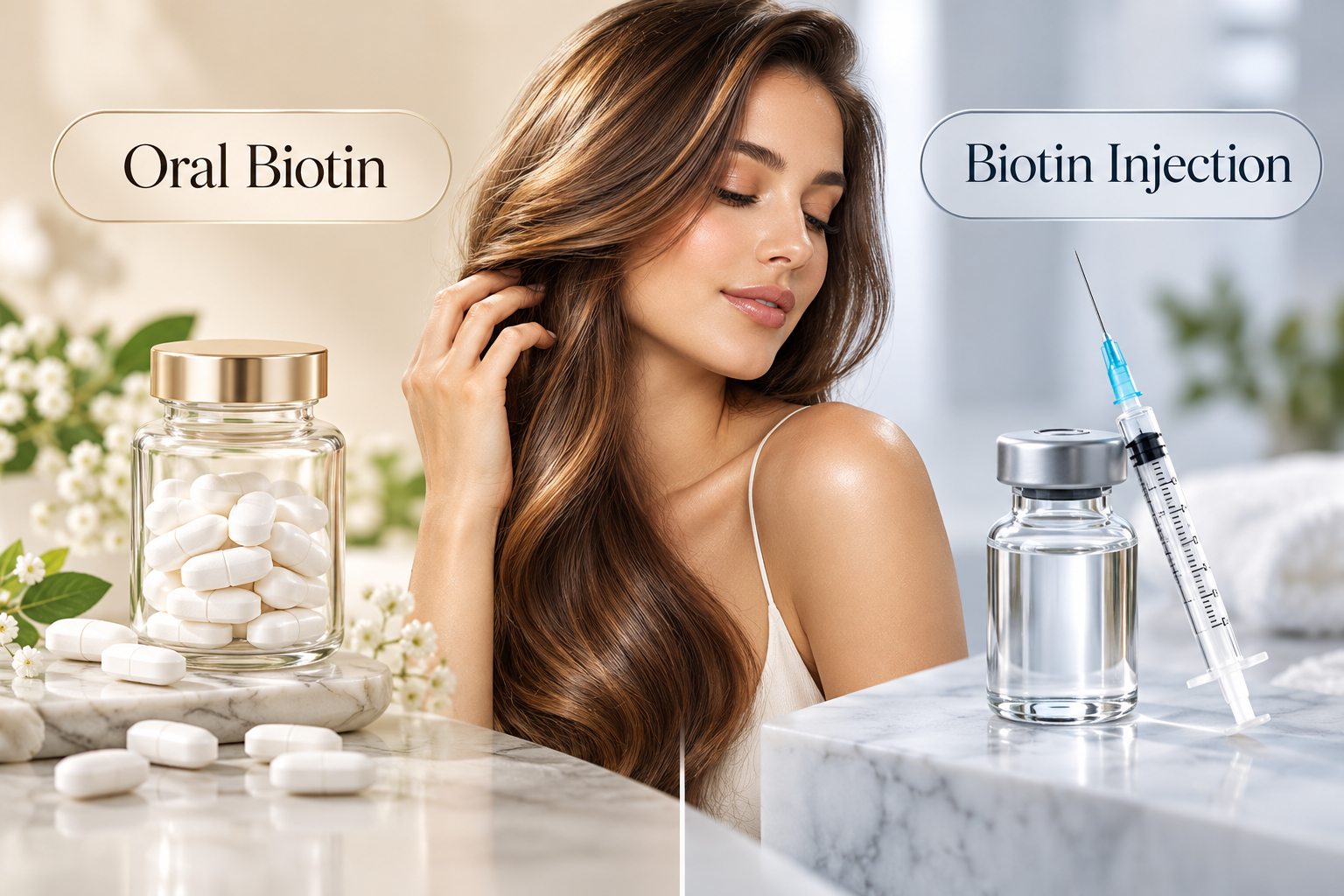
The biggest practical difference is the route of delivery.
Biotin injections bypass digestion, while oral supplements travel through the gastrointestinal system before absorption.
For people with specific absorption problems, the injectable route may be considered by a provider. For many others, oral biotin can still be absorbed effectively.
Current competitor evidence does not support assuming that injections always produce faster or better cosmetic results than tablets.
Drip Alchemy discusses similar route considerations in its guide to IV therapy versus oral supplements.
Biotin Injection vs Biotin IV Infusion
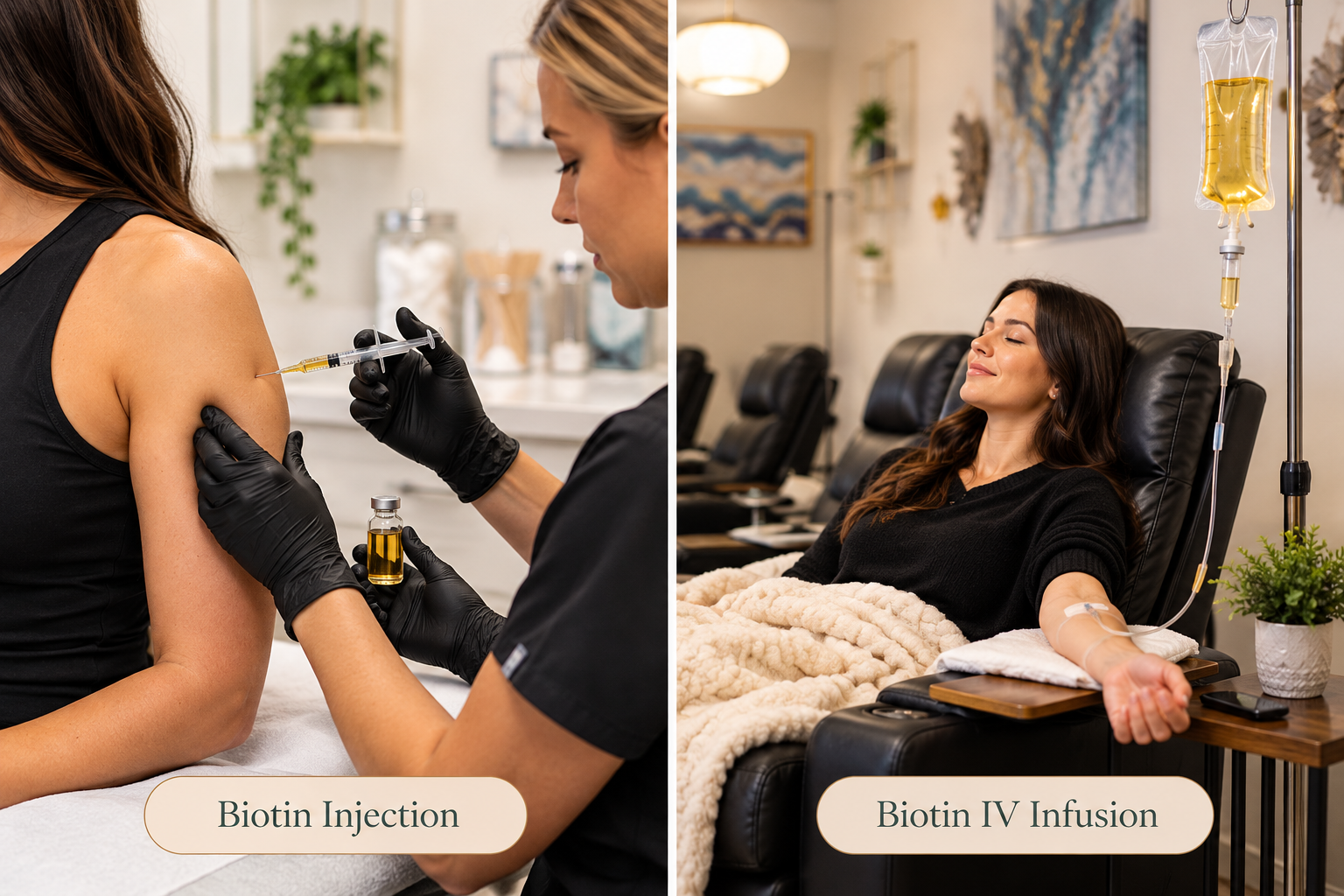
A biotin injection and a biotin IV infusion are not the same treatment.
An intramuscular injection places the nutrient into muscle. An IV infusion delivers ingredients directly into a vein through an intravenous line.
The route, formulation and treatment context are different.
This distinction matters because people often use terms like vitamin shot and vitamin IV interchangeably, even though they are not clinically identical.
Drip Alchemy's Vitamin Therapy, Infusions & Boosters page explains its broader vitamin treatment options. Biotin-specific IV availability should be confirmed directly rather than assumed.
What Is the Right Biotin Injection Dosage for Adults?
There is no single biotin injection dosage for adults that is appropriate for everyone.
The right amount depends on why biotin is being considered, the person's nutritional status, medical history, other supplements and the formulation being used.
Injectable biotin may also be a compounded preparation rather than an FDA-approved finished drug product. Protocol Health emphasizes the importance of clinician oversight for dosing and sourcing.
For that reason, online dose charts should not be used as a self-treatment guide.
Dosage should be individualized by a qualified healthcare professional.
How Often Are Biotin Injections Given?
Frequency should also be individualized.
There is no universal rule stating that every patient should receive a biotin injection weekly, twice weekly or monthly.
That is a more appropriate approach than using a fixed schedule for everyone.
The same principle applies more broadly to nutrient therapy. Drip Alchemy's guide on how often to get IV vitamin therapy also discusses why treatment frequency should reflect individual needs.
Are Biotin Injections Safe?
Biotin is generally considered well tolerated when used appropriately, but injections can still cause minor local reactions.
Temporary soreness, redness or tenderness at the injection site may occur.
One of the most important practical concerns with higher biotin intake is laboratory test interference.
Biotin can affect certain blood tests and may produce misleading results in some thyroid, hormone and cardiac-related assays.
Anyone receiving biotin should tell their healthcare provider and laboratory before blood testing.
This is especially important when those test results are being used to investigate symptoms such as hair loss or fatigue.
Who May Be a Good Candidate for Biotin Injections?
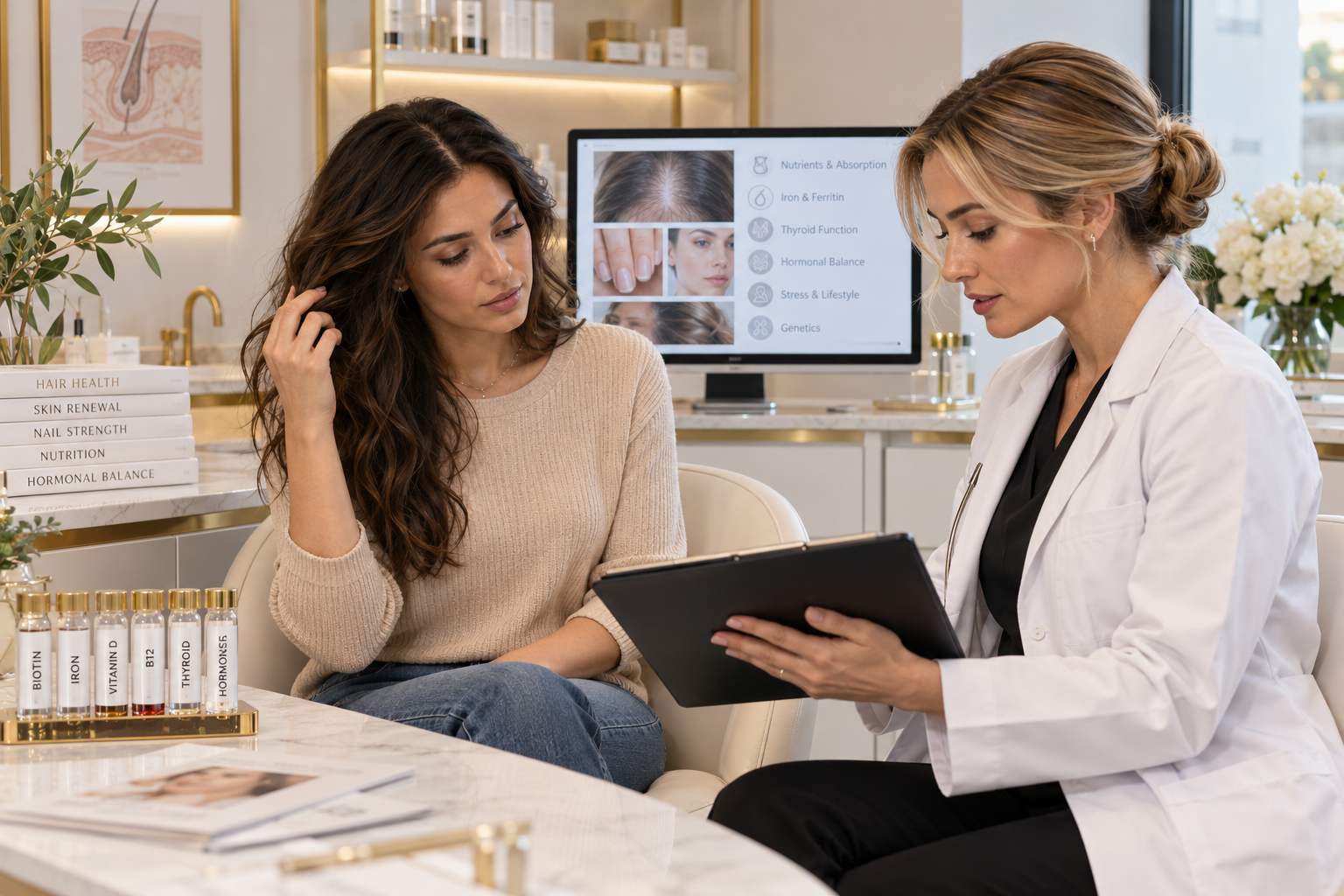
The strongest candidates are generally people with confirmed or suspected low biotin, absorption problems or other risk factors that make deficiency more likely.
Someone experiencing brittle nails or increased hair shedding may also be evaluated for biotin status as part of a wider assessment.
However, biotin is only one part of the picture.
Hair thinning and low energy can also be associated with iron status, thyroid conditions, hormones, vitamin D, stress and genetics.
A good provider should consider those possibilities instead of treating every symptom as a vitamin B7 problem.
What Happens at a Biotin Injection Appointment?
A typical visit should begin with a review of symptoms, health history, medications, supplements and treatment goals.
Depending on the situation, a provider may also consider whether bloodwork or further evaluation is appropriate.
The injection itself is usually brief. The most important part is the decision-making that happens before it.
Drip Alchemy's medical team provides wellness and aesthetic care within a clinician-led setting, which is particularly important for treatments involving injections and individualized nutrient planning.
Searching for Biotin Injections Near Me
People searching biotin injections near me should look beyond convenience alone.
A qualified provider should review medical history, explain realistic benefits, discuss possible lab interference and individualize frequency rather than sell a standard package to everyone.
The clinic should also be clear about how its injectable products are sourced and administered.
Promises of guaranteed hair growth or dramatic cosmetic results should be treated cautiously, especially when no evaluation of the underlying cause has taken place.
For people exploring vitamin-based wellness options in New York, a consultation with Drip Alchemy can help clarify which available service best fits the concern.
Frequently Asked Questions
What are the main biotin injection benefits?
The main potential benefits involve correcting low biotin and supporting normal hair, skin and nail health. People with adequate biotin levels may see little cosmetic change, so results depend heavily on baseline status.
Do biotin injections make hair grow?
Biotin may support healthier hair when deficiency is contributing to shedding or poor hair quality. It is not a guaranteed hair-growth treatment and will not correct every cause of hair loss.
How fast does biotin work for hair and nails?
Results usually develop gradually. Nail changes may be easier to notice sooner, while hair often takes several months because of its slower growth cycle.
Are biotin injections better than pills?
Not necessarily. Injections bypass digestion, but oral biotin is generally well absorbed. Available evidence does not show that injections automatically produce better hair or nail results.
What is the typical biotin injection dosage for adults?
There is no universal dose appropriate for every adult. Dosage should be based on medical history, nutritional status, formulation and clinical assessment.
Can biotin affect blood test results?
Yes. Higher biotin intake can interfere with certain laboratory assays and produce misleading results. Always tell healthcare providers and laboratories that you are using biotin.
Is a biotin IV infusion the same as a biotin injection?
No. An intramuscular injection delivers biotin into muscle, while an IV infusion delivers ingredients intravenously through a vein. They are different routes and should not be treated as interchangeable.
How often should you get biotin injections?
Frequency depends on the reason for treatment, baseline status and individual response. There is no standard schedule that is right for everyone.
Final Thoughts
The most realistic view of biotin injection benefits starts with understanding whether biotin is actually part of the problem.
Biotin can support normal hair, skin and nail health, but it is not a universal solution for hair loss, dull skin or brittle nails. Other nutritional, hormonal and medical factors may be involved.
Results also take time, and both dosage and frequency should be individualized rather than copied from an online schedule.
Professional assessment is especially important because biotin can interfere with certain blood tests. For people considering vitamin-based wellness support, reviewing symptoms, health history and treatment options with a qualified provider is the best place to start.
