
Key Takeaways:
Peptides are short chains of amino acids that act as signaling molecules in the body.
Different peptides support different skin processes, so there is no single best option for everyone.
GHK-Cu is particularly relevant for skin firmness, texture, and collagen-related processes.
Topical and medically supervised peptide therapies work differently and should not be treated as interchangeable.
Visible changes usually develop gradually and depend on the peptide, delivery method, skin condition, and individual response.
Skin naturally changes as collagen and elastin production declines with age. Over time, these changes can contribute to thinner skin, reduced elasticity, fine lines, and a gradual loss of firmness.
Peptides have become increasingly popular because certain types interact with biological processes involved in skin structure and repair. Rather than functioning as one universal anti-aging ingredient, each peptide may have a different role.
Finding the best peptides for skin tightening therefore depends on your goals, the specific peptide being considered, and how that peptide is delivered.
What Do Peptides Do in the Body?
Peptides are short chains of amino acids, the same building blocks the body uses to form larger proteins. Depending on their structure, they can participate in many different biological processes.
Some peptides act as signaling molecules that communicate instructions between cells. Others may be involved in hormone pathways, tissue repair, metabolism, inflammation, or structural protein production.
Within the skin, certain peptides are studied for their potential relationship with collagen, elastin, hydration, and cellular repair. Their effects vary because different peptides interact with different pathways.
For a broader introduction, Drip Alchemy's guide to what peptide therapy is and how it works explains the fundamentals of peptide-based therapy.
How Peptides May Support Skin Firmness
Healthy-looking skin depends heavily on collagen and elastin. Collagen provides structure and support, while elastin helps skin stretch and return to its original shape.
Fibroblasts are among the cells responsible for producing these structural components. Certain peptides may provide signals associated with collagen production, repair, and tissue remodeling.
These processes take time, so peptides should not be viewed as an instant solution for loose or aging skin. Improvements tend to develop gradually and vary from person to person.
Do Peptides Work for Skin Tightening?
Research around do peptides work requires some context because not every peptide has the same evidence or purpose.
Certain peptides have been studied for their relationship with collagen signaling, tissue repair, skin texture, and visible signs of aging. Results can still vary according to formulation, concentration, delivery method, and individual skin characteristics.
Topical products also face a practical limitation: the skin is designed to keep substances out. Some peptide molecules may not penetrate deeply enough to reach their intended target in meaningful concentrations.
Medically administered peptides work through different delivery routes, but that does not automatically make them better for everyone. They require appropriate medical evaluation and professional supervision.
Drip Alchemy covers this distinction further in its guide on whether injectable peptides may help with skin tightening.
What Are the Best Peptides for Skin Tightening?
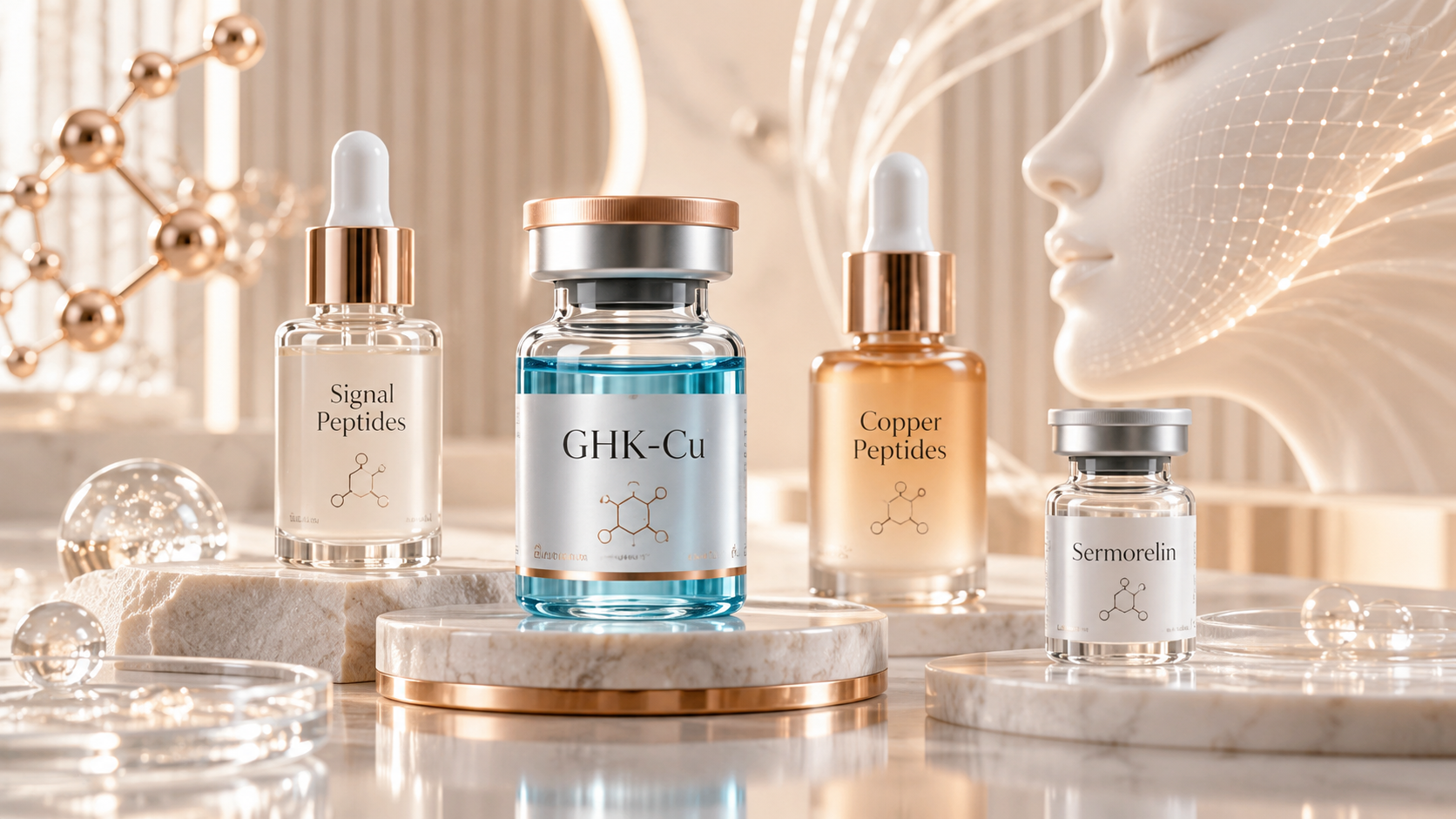
Different peptides support different biological functions, which is why no universal ranking applies to every person.
The best choice depends on whether your main concern involves firmness, fine lines, skin texture, repair, or broader signs of aging.
GHK-Cu Copper Peptide
GHK-Cu is one of the most relevant peptides when discussing skin firmness and overall skin quality.
Copper also plays a role in connective tissue processes. When paired with GHK, it forms a peptide complex that has attracted interest in both skincare and regenerative medicine.
For people researching the best anti aging peptides, GHK-Cu is especially noteworthy because its potential applications extend beyond one visible concern.
Drip Alchemy provides more information about GHK-Cu copper peptide therapy and how it may fit into a medically supervised care plan.
You can also read the dedicated guide on how GHK-Cu may support skin texture and tone.
Signal Peptides
Signal peptides are commonly found in topical anti-aging skincare.
Their main role is cellular communication. Certain signal peptides are designed to support processes associated with collagen and other components of the skin's extracellular matrix.
Their performance still depends on factors such as formulation quality, stability, and skin penetration. Seeing the word "peptide" on a label alone does not guarantee meaningful results.
Copper Peptides
Copper peptides represent a broader category that includes GHK-Cu.
They are commonly discussed in relation to skin repair, collagen-related activity, tissue remodeling, and maintaining healthier-looking skin.
Their versatility is one reason copper peptides frequently appear in discussions about the best peptide for skin.
However, topical copper peptides and medically administered peptide therapies should be considered separately because their delivery and clinical use are different.
Sermorelin
Sermorelin belongs to a different category than topical cosmetic peptides.
Rather than acting directly as a skin-tightening ingredient, it is used within medically supervised peptide therapy for broader physiological purposes related to growth hormone signaling.
Its potential relevance to healthy aging should therefore be discussed differently from peptides found in creams or serums.
Anyone considering Sermorelin should base the decision on medical evaluation rather than cosmetic claims alone.
Which Is the Best Peptide for Skin?
Choosing the best peptide for skin starts with identifying the concern you want to address.
GHK-Cu is one of the more relevant options for people interested in skin texture, firmness, and collagen-related processes.
Signal peptides may be more suitable for topical routines designed to support collagen signaling. Other peptide categories may focus more on expression lines, barrier support, or tissue repair.
The most useful approach is to match the peptide to the goal instead of choosing one simply because it is popular.
Topical vs Injectable Peptides for Skin Tightening
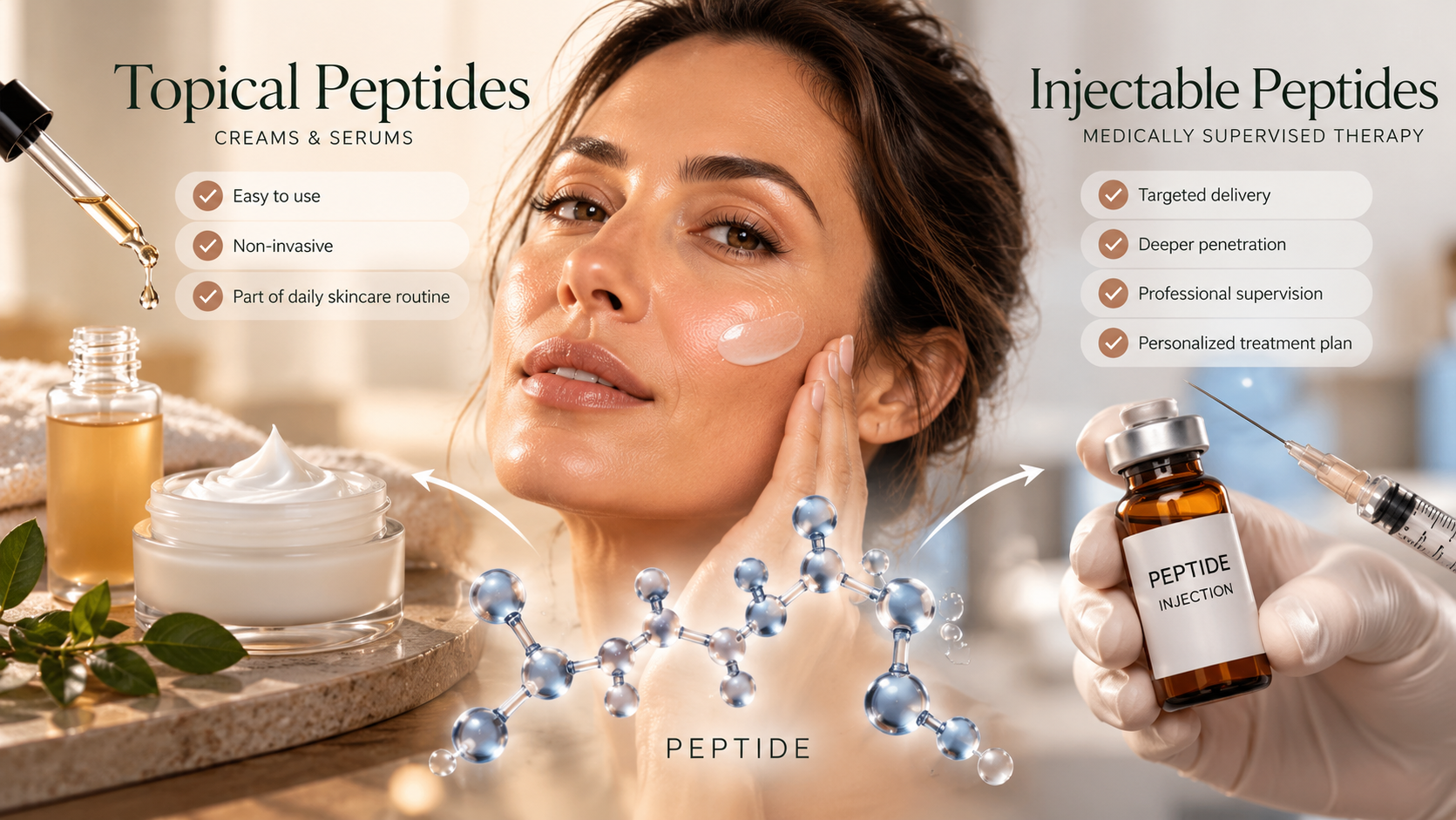
Topical and injectable peptides may share similar terminology, but they should not be treated as the same type of therapy.
Topical peptides are commonly delivered through creams or serums. They are easy to incorporate into a skincare routine and do not require injections.
Medically administered peptide therapies use a different delivery route and require professional oversight. Suitability depends on the peptide, medical history, goals, and provider assessment.
For more detail, Drip Alchemy's guide to how peptides benefit the skin explores both topical and clinically administered approaches.
How Long for Peptides to Work for Skin?
The question how long for peptides to work for skin does not have one universal answer.
Early changes in hydration, texture, or overall skin appearance may occur before more noticeable changes in firmness.
Collagen remodeling generally takes longer because it involves gradual biological processes rather than an immediate cosmetic effect.
Age, baseline skin condition, sun exposure, consistency, lifestyle, peptide type, and delivery method can all influence the timeline.
Drip Alchemy's guide to tracking your progress through peptide therapy explains why ongoing assessment matters.
Are Peptides Among the Best Anti-Aging Options for Skin?
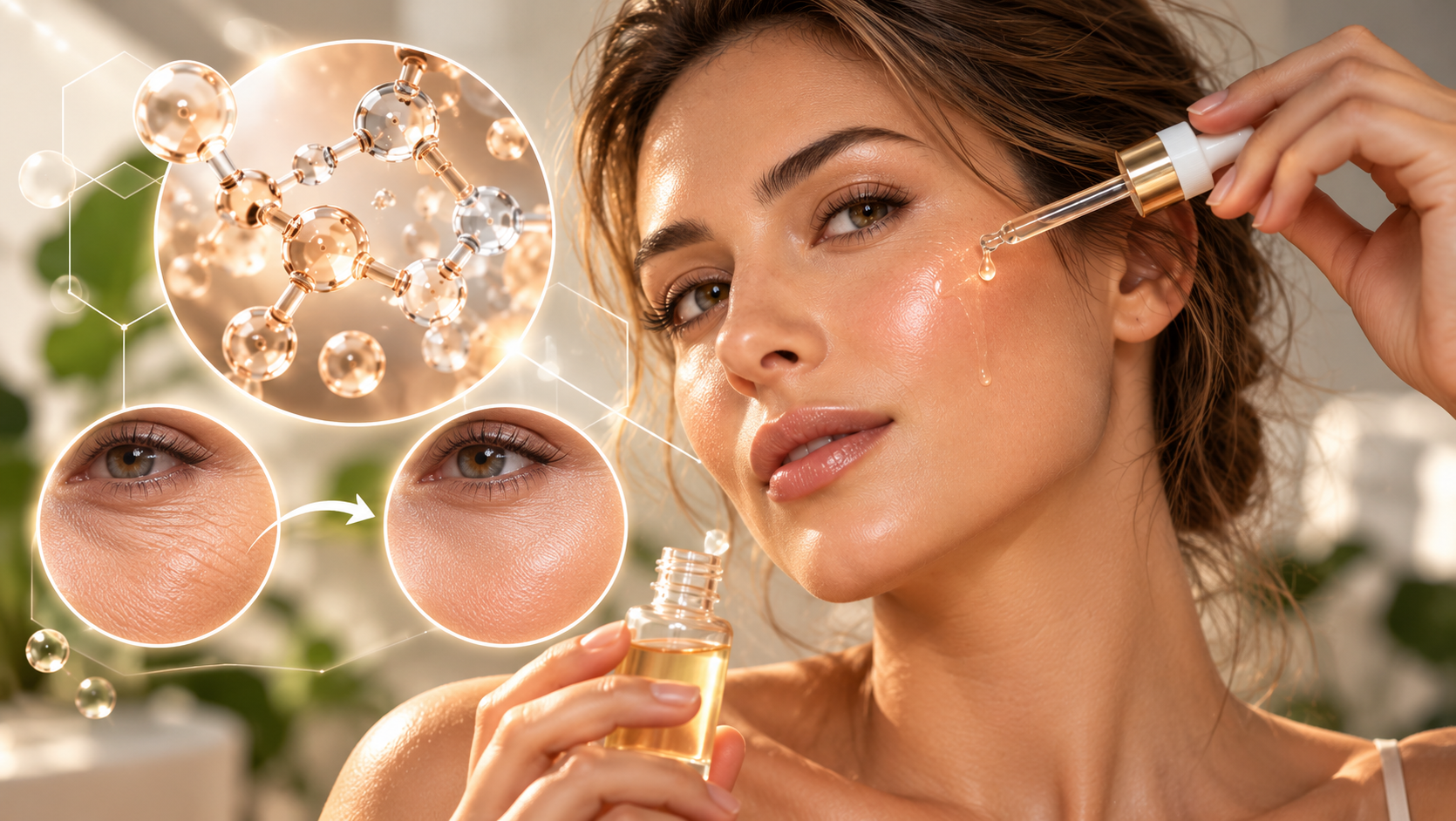
Peptides can play a useful role in an anti-aging strategy when the goal involves skin firmness, texture, resilience, or collagen-related processes.
At the same time, aging skin is influenced by many factors. Sun exposure, pigmentation, dehydration, facial volume changes, muscle movement, and collagen loss do not all respond to the same treatment.
Even the best anti aging peptides should therefore be viewed as one part of a broader skin-care strategy.
Daily sun protection, appropriate skincare, nutrition, and professionally recommended treatments can remain important alongside peptide therapy.
Who May Be a Good Candidate for Peptide Therapy?
Adults noticing changes in skin firmness, texture, or resilience may be interested in discussing peptide therapy with a medical provider.
People exploring healthy-aging strategies or medically supervised approaches to skin quality may also want to learn whether specific peptides match their goals.
Suitability depends on more than appearance alone. Health history, medications, existing conditions, previous treatments, and the proposed delivery method all matter.
At Drip Alchemy, peptide therapy is approached through individualized assessment rather than a standard treatment plan for every patient.
FAQs
What is the best peptide for skin tightening?
There is no universally best peptide, but GHK-Cu is one of the most relevant options for skin firmness, texture, and collagen-related processes. The right choice depends on your concerns, treatment goals, delivery method, and medical suitability.
Do peptides really work for skin?
Certain peptides may support processes involving collagen signaling, skin repair, hydration, and texture. Results vary according to the peptide, formulation, delivery route, consistency, and individual response.
How long does it take for peptides to work on skin?
Changes may develop over several weeks or months. Improvements in hydration or texture may appear earlier, while collagen remodeling and visible changes in firmness usually require more time.
What do peptides do in the body?
Peptides act as short chains of amino acids involved in cellular communication. Depending on the peptide, they may influence tissue repair, metabolism, hormone signaling, inflammation, or structural protein production.
Is GHK-Cu good for aging skin?
GHK-Cu has been studied for its relationship with tissue remodeling, collagen-related activity, skin repair, and visible signs of aging. Whether it is suitable for you depends on your goals and medical assessment.
Are injectable peptides better than topical peptides?
Neither approach is automatically better. Topical peptides are non-invasive but depend on formulation and penetration, while medically administered peptides involve different delivery methods and require professional supervision.
Final Thoughts
Finding the best peptides for skin tightening is less about choosing one trendy ingredient and more about matching a peptide to the right skin concern.
GHK-Cu stands out as one of the most relevant peptides for firmness, texture, and age-related skin changes, while other peptide categories may support different goals.
Because medically administered peptides require individualized evaluation, treatment decisions should be based on your health history, skin concerns, and guidance from a qualified medical provider.
