
How Do Peptides Benefit the Skin?
Peptides are short chains of amino acids that act as messengers in the skin, signaling cells to produce more collagen and elastin, strengthen the skin barrier, and repair damage. In practical terms, that can mean firmer, smoother, more hydrated, and more radiant-looking skin over time. Peptides are available in topical products and, increasingly, as professionally administered injectable treatments for a more targeted effect.
Peptides have become one of the most talked-about ingredients in skincare and aesthetic medicine, and for good reason. As we age, our skin naturally produces less collagen, and peptides are one of the tools designed to help support what our skin loses over time. But what do peptides actually do for skin, and how do the newer injectable options compare to the serums on your bathroom shelf?
AtDrip Alchemy NYC, our licensed medical team offers professionally administered peptide therapy as part of a science-driven approach to skin and wellness. Here's an honest, clear look at how peptides benefit the skin and what to consider before trying them.
What Are Peptides?
Peptides are short chains of amino acids, the same building blocks that make up proteins like collagen, elastin, and keratin. Think of proteins as long, complex structures and peptides as the smaller fragments that help build and maintain them.
In the skin, peptides do something clever: they act as signaling molecules. When applied or delivered to the skin, certain peptides essentially send a message to your cells telling them to ramp up specific activities, such as producing more collagen. Because collagen gives skin its firmness and bounce, that signal matters a great deal for how skin looks and feels.
This is the core of how peptide skin treatments work: they don't just sit on the surface; they actively communicate with your cells.
What Do Peptides Do for Skin?
So what do peptides do for skin in everyday terms? Different peptides serve different roles, but the most valued skin benefits include:
Boosting collagen and elastin. Signal peptides encourage the skin to produce more of the structural proteins that keep it firm and elastic.
Smoothing fine lines and wrinkles. More collagen and better hydration can soften the look of lines over time.
Strengthening the skin barrier. A healthier barrier means better moisture retention and more resilience against irritation.
Supporting repair and regeneration. Some peptides play a role in wound healing and skin renewal.
Improving hydration and tone. Many people notice plumper, more even-looking skin with consistent use.
If you've wondered what peptides do for your face specifically, this is it: they work behind the scenes to support the structure, hydration, and resilience that make facial skin look healthy and youthful.
How Peptides Support Collagen and Firmness
Collagen is the scaffolding of your skin. It keeps everything lifted, smooth, and springy, and it's exactly what we lose as we age. By the time many people reach their thirties and forties, collagen production has already slowed noticeably.
This is where peptides earn their reputation. Signal peptides like palmitoyl peptides are known for prompting fibroblasts (the collagen-producing cells) to get back to work. Copper peptides, such as GHK-Cu, are studied for their role in skin regeneration and repair. By supporting the body's own collagen machinery rather than simply masking the surface, peptides address one of the root causes of visible aging.
Topical vs. Injectable Peptides for Skin
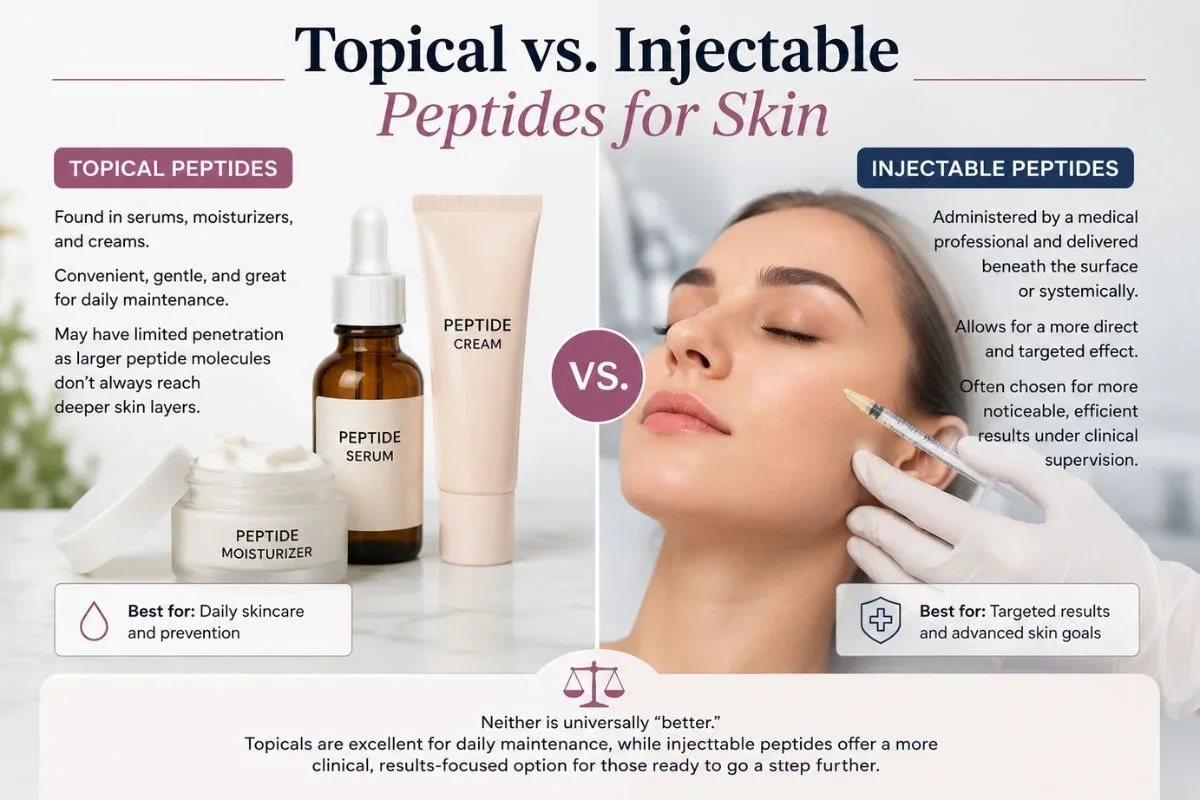
Topical vs. injectable peptides for skin: comparing daily skincare products with clinically administered peptide treatments.
Peptides come in two main formats, and the difference matters.
Topical peptides are found in serums, moisturizers, and creams. They're convenient and gentle, though their effects can be limited because larger peptide molecules don't always penetrate deeply into the skin.
Injectable peptides for skin are administered by a medical professional and delivered beneath the surface or systemically, which can allow for a more direct and targeted effect. Because injectables bypass the skin's outer barrier, they're often chosen by people seeking more noticeable, efficient results under clinical supervision.
Neither is universally "better." Topicals are excellent for daily maintenance, while injectable peptides offer a more clinical, results-focused option for those ready to go a step further.
Beauty Peptide Injections: What Are They?
Beauty peptide injections refer to peptide treatments delivered by a qualified provider to support skin health, appearance, and anti-aging goals from the inside out. Rather than relying solely on what a cream can absorb, these treatments deliver peptides in a controlled, medically supervised way.
At Drip Alchemy, our peptide options include well-known choices like GHK-Cu copper peptide, valued for its role in skin repair and regeneration, and glutathione, a powerful antioxidant popular for its brightening, "glow" effect. Each is selected based on your goals during a personalized consultation.
What Does a Glow Peptide Do?
You may have seen "glow" treatments trending and wondered, what does glow peptide do? The term usually refers to peptide and antioxidant treatments, most notably glutathione, that aim to brighten the complexion and promote a radiant, even-toned look.
Glutathione is a master antioxidant naturally found in the body. It helps neutralize free radicals and is popularly associated with a brighter, more luminous appearance. While it's widely used for its "glow" reputation, it's worth noting that evidence for skin-brightening effects is still developing, which is why professional guidance matters. A qualified provider can help set realistic expectations and ensure the treatment is right for you.
Benefits of Peptide Injections for Skin
The benefits of peptide injections appeal to anyone looking to support their skin more proactively. When administered by a licensed professional, potential benefits include:
Targeted delivery that doesn't rely on a cream penetrating the skin barrier
Support for collagen and skin structure for firmer, smoother-looking skin
Antioxidant and brightening effects, particularly with treatments like glutathione
Skin repair and regeneration support, especially with copper peptides
A customizable approach tailored to your specific skin and wellness goals
As with any aesthetic treatment, results vary from person to person, and peptides work best as part of a consistent, well-rounded routine rather than a one-time fix.
How Long Do Peptides Take to Work for Skin?
Patience is part of the process. If you're asking how long for peptides to work for skin, the honest answer is that peptides are not an overnight solution. Because they work by supporting your skin's natural processes, like collagen production, results build gradually.
With topical peptides, many people begin noticing improvements in skin texture and hydration within a few weeks, with more significant firmness and fine-line benefits appearing over several months of consistent use. Injectable and professionally administered peptide protocols are typically structured over multiple sessions, and your provider will guide you on a realistic timeline based on your goals.
The key takeaway: consistency matters more than speed. Peptides reward a steady, long-term approach.
Are Peptide Injections Right for You?
Peptide therapy appeals to a wide range of people, from those focused on anti-aging and skin quality to anyone wanting a more radiant complexion. That said, injectable treatments aren't appropriate for everyone. Your health history, medications, allergies, and goals all factor into whether a given peptide is a good fit, and certain circumstances (like pregnancy) call for extra caution.
This is exactly why a medical consultation comes first. Meeting with a qualified provider ensures your treatment is safe, appropriate, and tailored to you. You can learn more about the clinicians who would guide your care on our medical team page.
Why Choose Drip Alchemy for Peptide Therapy in NYC
When it comes to injectable treatments, expertise is everything. What sets Drip Alchemy apart is the combination of clinical rigor and a genuinely refined, personalized experience. Every treatment is administered by an experienced, board-certified provider using ingredients from FDA-approved 503A/B compounding pharmacies, following strict sterility and safety standards.
Pair that with transparent, gratuity-free pricing and a calm, boutique setting, and you have a place where science-driven skincare and elevated self-care meet.
A Note on Health and Safety
The information in this article is for educational purposes and has not been evaluated by the U.S. Food and Drug Administration. It is not intended to diagnose, treat, cure, or prevent any disease, and individual results may vary. Peptide therapies are considered investigational. Always consult a qualified healthcare provider before beginning any new treatment.
Ready to Explore Peptide Therapy in NYC?
Healthy, radiant skin is about supporting it from the inside out, and peptides are one of the more exciting tools for doing exactly that, especially when delivered safely by an expert medical team. If you're curious whether peptide therapy fits your goals, the best first step is a conversation.
Book a consultation with our clinicians, reach out with any questions, or book your appointment today. Let's help your skin look and feel its absolute best.
Frequently Asked Questions About Peptides for Skin
What do peptides do for your skin?
Peptides signal your skin cells to produce more collagen and elastin, strengthen the skin barrier, and support repair. The result can be firmer, smoother, more hydrated, and more radiant-looking skin over time.
Are injectable peptides better than topical ones?
Not necessarily better, but different. Topical peptides are great for gentle daily maintenance, while injectable peptides for skin offer more direct, targeted delivery under medical supervision. Many people use topicals for upkeep and consider professional treatments for more noticeable results.
How long do peptides take to work on skin?
Peptides work gradually. Topical users often see texture and hydration improvements within a few weeks, with firmness and fine-line benefits building over several months. Injectable protocols are typically spaced across multiple sessions with a timeline your provider will outline.
What does a glow peptide injection do?
Glow treatments usually involve glutathione, a master antioxidant associated with a brighter, more even-toned complexion. It helps combat free radicals, though evidence for its brightening effects is still developing, so professional guidance is important.
Are peptide injections safe?
When administered by a qualified, licensed medical professional using high-quality ingredients, peptide injections are generally well tolerated. As with any treatment, side effects are possible, which is why a consultation and proper medical oversight are essential.
What is GHK-Cu copper peptide good for?
GHK-Cu is a copper peptide studied for its role in skin regeneration, wound healing, and collagen support. It's a popular choice for those focused on skin repair and anti-aging.
Can peptides replace Botox or fillers?
No. Peptides support skin quality, collagen, and hydration, but they work differently from Botox (which relaxes muscles) and fillers (which add volume). Many people use peptides alongside other treatments as part of a comprehensive plan.
