
Key Points:
BPC-157, TB-500, and GHK-Cu are commonly discussed for joint and tissue recovery.
Human evidence for many injectable peptides is still limited.
Collagen peptides have more research for joint discomfort and function.
No peptide is proven to be the “best” treatment for joint pain.
Joint pain should be medically evaluated before starting peptide therapy.
Joint pain can make everyday movement, exercise, and recovery difficult. This has increased interest in peptides for joint pain, especially those linked with inflammation and tissue repair.
The main question is whether these peptides actually work. Some show promising activity in laboratory and animal studies, but human evidence remains limited for many popular injectable options.
This article explains which peptides are commonly discussed, what current research suggests, and where evidence remains unclear.
What Are Peptides and Why Are They Used for Joint Pain?
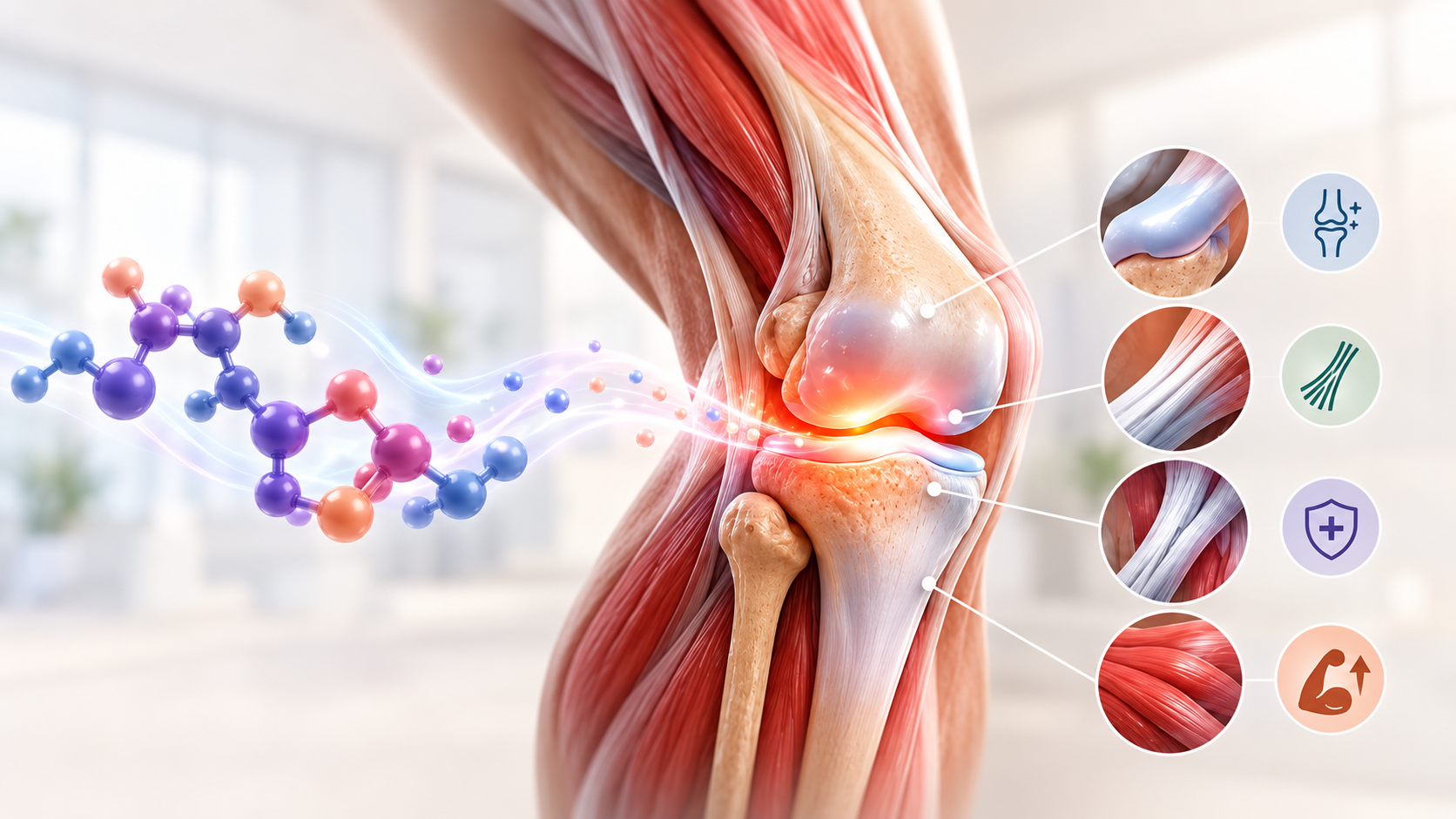
Peptides are short chains of amino acids that act as signaling molecules in the body. They are involved in processes such as tissue repair, immune activity, growth, and inflammation.
This is why researchers are interested in peptides for joints. Joint discomfort may involve cartilage, tendons, ligaments, muscles, or inflammation around the joint.
However, every peptide works differently. Evaluate each peptide based on its evidence, safety, and intended use.
For a broader overview, see Drip Alchemy’s beginner’s guide to peptide therapy.
Do Peptides for Joint Pain Really Work?
Some peptides for joint pain show promising effects in early research, but many have not been proven to treat joint pain in people.
Researchers are studying their possible effects on collagen production, blood flow, inflammatory signaling, and tissue repair.
So, the science is interesting, but the clinical evidence is not yet strong enough to make broad treatment claims.
Which Peptides Are Commonly Discussed for Joint Pain?

BPC-157
BPC-157 is often discussed for tendon, ligament, muscle, and soft-tissue recovery.
Early research has explored its possible effects on tissue healing and inflammation. This is why it is often mentioned as a peptide for joint pain.
However, strong human evidence is still limited, and it should not be described as a proven joint-healing treatment.
TB-500
TB-500 is another peptide commonly linked with recovery and mobility.
Research interest focuses on cell movement, tissue repair, and inflammatory pathways.
However, there is not enough high-quality human evidence to prove that TB-500 reliably reduces joint pain or repairs damaged cartilage.
GHK-Cu
GHK-Cu is a copper-binding peptide mainly studied for collagen and tissue-related processes.
Because collagen is important for tendons and ligaments, GHK-Cu has attracted interest in recovery and joint support.
Still, research specifically showing that GHK-Cu improves joint pain in people is limited.
Drip Alchemy covers this peptide in more detail in its article on GHK-Cu peptide and skin health.
Collagen Peptides
Collagen peptides are different from experimental injectable peptides.
They are usually taken orally and have been studied more directly for joint health.
Some human studies suggest they may help support joint function and reduce discomfort, although the evidence is still developing.
How Might Peptides Affect Joint Inflammation?
The interest in peptides for inflammation and joint pain comes from their possible effects on repair-related pathways.
Some peptides may influence:
inflammatory signaling
collagen production
fibroblast activity
blood vessel formation
soft-tissue repair
These processes are important for tendons, ligaments, and other tissues around a joint.
However, affecting a biological pathway does not automatically mean a peptide will reduce pain in people.
What Does the Research Say?
The evidence varies significantly depending on the peptide.
Some peptide-based medications are well studied and FDA-approved for specific conditions. Experimental peptides do not have the same level of evidence.
Harvard Health notes that many injectable peptides promoted online still lack strong evidence for both safety and effectiveness. Pasted text
For joint health, collagen peptides currently have more human research than BPC-157, TB-500, or injectable GHK-Cu.
This is why there is no proven list of the best peptides for joint pain.
Are Peptides for Joint Pain Safe?
Safety depends on the specific peptide, its source, and how it is used.
Experimental products may carry concerns related to purity, contamination, incorrect concentrations, and immune reactions.
Long-term safety data is also limited for many injectable peptides. Pasted text
Anyone considering peptide therapy should discuss the specific product and possible risks with a qualified healthcare professional.
Why Should Joint Pain Be Evaluated First?
Joint pain can have many causes, including arthritis, tendon injuries, ligament problems, gout, autoimmune conditions, and overuse.
These conditions may require very different treatment approaches.
Persistent or worsening pain should be properly evaluated before considering peptides for pain.
A medical assessment can help identify the cause and determine whether peptide therapy has any appropriate role.
Frequently Asked Questions
What Are the Best Peptides for Joint Pain?
BPC-157, TB-500, and GHK-Cu are commonly discussed, but current evidence is not strong enough to identify one as the proven best option.
Collagen peptides have more human research related to joint function and discomfort.
Can Peptides Reduce Joint Inflammation?
Some peptides are being studied for their effect on inflammatory pathways.
However, human evidence is still limited, so they should not be considered proven anti-inflammatory treatments for joint pain.
Is BPC-157 Proven to Help Joint Pain?
No. BPC-157 has shown promising effects in early research, but strong human trials have not established it as a proven treatment for joint pain.
How Long Do Peptides Take to Work?
There is no fixed timeline.
Response can vary depending on the peptide, the condition, treatment method, and individual factors.
Drip Alchemy explains this further in its guide to tracking progress during peptide therapy.
Are Peptides FDA-Approved for Joint Pain?
Many experimental peptides, including BPC-157 and TB-500, should not be described as FDA-approved treatments for joint pain.
Their regulatory status and available evidence should be reviewed before use.
Considering Peptide Therapy for joint pain in NYC
Research into peptides for joint pain is growing, but the evidence is not equally strong for every peptide.
BPC-157, TB-500, and GHK-Cu remain experimental for joint-related use, while collagen peptides have somewhat more human research.
Drip Alchemy NYC provides medically supervised peptide therapy based on individual health history and goals.
A consultation can help determine whether peptide therapy may be appropriate and what other treatment options should be considered.
