
Oral vs. Injectable Weight Loss Medications: Which Is Right for You?
Key Takeaways
Oral GLP-1 medications avoid needles but generally require daily dosing. Some also have specific instructions about food and water.
Injectable options may involve weekly or daily treatment, depending on the medication.
Weight loss results depend on the drug, dose, treatment duration, and individual response—not just whether it is a pill or injection.
Both forms can cause side effects and require medical screening.
A treatment that fits your health needs and daily routine is easier to use consistently.
Weight loss pills and injections can both support weight management, but the experience with each treatment can be quite different. Pills may fit more easily into a daily routine, while injections are usually taken less often and may suit people who prefer a simpler dosing schedule.
Oral and injectable semaglutide also differ in how they are taken, how the body absorbs them, and the instructions that come with each form. Side effects, medical history, treatment goals, and how well someone can follow the dosing routine all play a role in deciding which option may be more suitable.
The right choice comes down to finding a treatment that is effective, manageable, and appropriate for your health. A healthcare provider can help compare the options and recommend a plan based on your individual needs.
How Do GLP-1 Weight Loss Medications Work?
GLP-1 medications imitate a hormone released by the body after eating. They act on receptors involved in appetite and fullness, helping people feel satisfied with less food. Some also slow stomach emptying and affect blood sugar regulation.
Semaglutide is a GLP-1 receptor agonist. Tirzepatide acts on two hormone pathways, GLP-1 and GIP. Although both are used in prescription weight management, they are different medications and should not be compared as though they were simply different versions of the same drug.
These treatments work alongside nutritional changes, physical activity, and ongoing medical care. They do not directly burn fat, and their results vary between individuals.
What Oral Weight Loss Medications Are Available?
Prescription pills now include more than one GLP-1 option. It is important to distinguish the active ingredient and approved use of each product.
Oral Semaglutide
Wegovy tablets contain semaglutide and are FDA-approved for weight management in eligible adults. They are taken daily, with specific instructions designed to support absorption.
Rybelsus also contains oral semaglutide, but it is approved for type 2 diabetes rather than being the weight-management version of Wegovy. The two products should not be treated as interchangeable.
Orforglipron
Foundayo contains orforglipron, a different GLP-1 medication. The FDA approved it in April 2026 for long-term weight management in eligible adults, alongside reduced-calorie eating and increased physical activity.
Unlike oral Wegovy, Foundayo can be taken with or without food. That distinction may matter when discussing treatment routines with a prescriber.
The availability of multiple pills gives patients more options, but their doses, instructions, and clinical evidence are not identical.
What Are the Different Types of Weight Loss Injections?

The types of weight loss injections commonly discussed include semaglutide, tirzepatide, and liraglutide.
Injectable Wegovy contains semaglutide. Zepbound contains tirzepatide, which acts on both GLP-1 and GIP receptors. Saxenda contains liraglutide and follows a different dosing schedule.
Ozempic and Mounjaro are also familiar names, but their approved uses should be distinguished from those of Wegovy and Zepbound rather than grouping every injection under the same weight-management indication.
For a closer look at two commonly discussed ingredients, Drip Alchemy's semaglutide and tirzepatide comparison explores their differences.
Do Weight Loss Pills Work as Well as Injections?
Both oral and injectable prescription medications can produce meaningful weight loss in eligible patients. The results depend on the particular medication, dose, study population, and length of treatment.
It is misleading to compare the results of an older, lower-dose semaglutide tablet with those of a newer weight-management injection and conclude that all pills are less effective.
Clinical trials of oral Wegovy have demonstrated substantial weight reduction, while injectable semaglutide and tirzepatide also have evidence supporting their approved uses. However, results from separate trials are not the same as a direct comparison between treatments.
Consistency is another consideration. A medication may have strong clinical evidence but be difficult for someone to take as prescribed because of its routine, side effects, or cost.
Weight management also extends beyond medication. Eating patterns, physical activity, sleep, and follow-up care remain important. Drip Alchemy's guide to everyday habits that support weight loss covers practical habits that can accompany an individualized treatment plan.
Side Effects and Safety: Pills vs. Injections
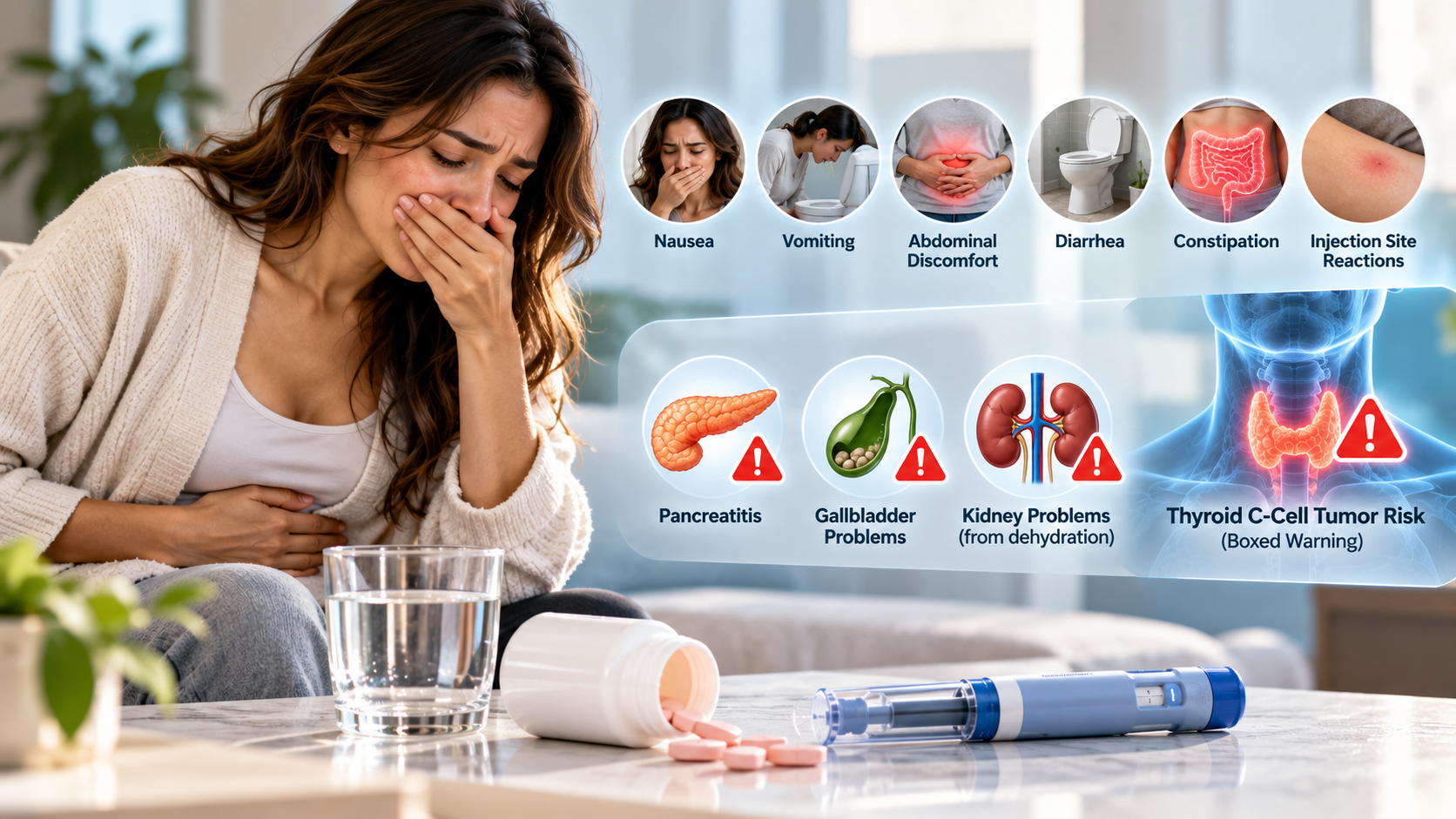
Oral and injectable GLP-1 medications share several potential side effects. Nausea, vomiting, diarrhea, constipation, and abdominal discomfort are among the common concerns. Injections can also cause reactions at the administration site.
The risks are not identical for every product. Prescribing information includes important warnings and precautions relating to conditions such as pancreatitis, gallbladder problems, severe gastrointestinal reactions, and dehydration-related kidney problems.
Some GLP-1 medications also carry a boxed warning about thyroid C-cell tumors observed in rodents. They are contraindicated in people with a personal or family history of medullary thyroid carcinoma or multiple endocrine neoplasia syndrome type 2. A clinician should review the specific medication's label and the patient's history before prescribing.
FDA-Approved and Compounded Medications Are Not the Same
Patients should know exactly which product they are receiving.
FDA-approved medications have undergone the agency's review for safety, effectiveness, and quality. Compounded semaglutide and tirzepatide products have not undergone that approval process.
The FDA has also warned about dosing errors involving compounded injectable semaglutide, including errors that led to hospitalization. It advises that compounded GLP-1 drugs should be used only when an FDA-approved drug cannot meet a patient's medical needs.
If a clinic offers a compounded formulation, ask why it is being considered, where it is prepared, and how the intended dose will be communicated.
For more on longer-term treatment considerations, read Drip Alchemy's article on the safety of weight-loss injections for long-term use.
Pasted markdown.md
How to Choose Between a Pill and an Injection

The decision should begin with medical eligibility, not convenience alone. Your provider will need to review your health history, current medications, treatment goals, and any conditions that may affect safety.
Daily routine matters, too. A morning tablet with fasting instructions may be inconvenient for someone who works changing shifts. A weekly injection may be easier to remember but unsuitable for someone who cannot comfortably administer it.
Cost and insurance coverage can also affect whether a treatment is sustainable. Coverage varies by product and plan, so confirm the actual out-of-pocket cost before starting.
A medical weight loss consultation provides an opportunity to discuss these considerations and establish realistic expectations.
Frequently Asked Questions
Is Oral Semaglutide as Effective as Injectable Semaglutide?
Both forms have evidence supporting weight management, but results depend on the approved product and dose. Comparing separate clinical trials cannot establish which formulation will produce better results for an individual.
Which Weight Loss Injection Is the Best?
There is no single injection that is appropriate for everyone. A prescriber should consider medical eligibility, expected benefits, potential risks, previous treatment response, and the person's ability to follow the treatment plan.
Is There an FDA-Approved Tirzepatide Oral Solution?
No. As of September 2026, FDA-approved tirzepatide products are injectable. A product advertised as an oral tirzepatide solution should not be assumed to have FDA approval.
Can I Switch From a GLP-1 Injection to a Pill?
A switch may be possible, but the medications and doses are not automatically interchangeable. Your prescriber should determine whether another product is appropriate and provide the correct transition instructions.
Explore Medical Weight Loss at Drip Alchemy NYC
The choice between oral and injectable treatment should reflect your health needs, preferences, and ability to follow a long-term plan.
Drip Alchemy NYC offers medical weight loss injections through its licensed clinical team. A consultation can help clarify the treatments available at the clinic, their suitability, and the medical follow-up involved.
Schedule a consultation with Drip Alchemy NYC to discuss your goals and the questions to consider before starting prescription weight loss treatment.
