
NAD+ and Immune Health: Understanding the Connection to Cellular Energy
Your immune system runs on energy, and that energy comes from your cells. Every time your body fights off a virus, repairs damaged tissue, or mounts an inflammatory response, it's drawing on a constant supply of cellular fuel. At the center of that fuel supply sits a molecule most people have never heard of until recently: NAD+.
NAD+ (nicotinamide adenine dinucleotide) has become a buzzword in the wellness world, often discussed alongside anti-aging and energy claims. But its actual biological role is far more specific and far more interesting than most marketing lets on. Understanding NAD+'s role in cellular respiration is the key to understanding why it matters for immune health and why so many people are exploring NAD+ therapy as part of a broader wellness routine.
At Drip Alchemy NYC, our licensed medical team believes informed clients make better decisions. So let's take an honest, science-grounded look at what NAD+ actually does inside your cells, how that connects to immune function, and what current research does and doesn't support.
What Is NAD+ and Why Does It Matter?
NAD+ is a coenzyme found in every living cell in your body. Think of it less like a nutrient and more like a shuttle, constantly moving electrons between molecules to keep essential chemical reactions running. Without it, your cells simply can't produce usable energy efficiently.
NAD+ exists in two related forms that cycle back and forth: NAD+ (oxidized) and NADH (reduced). This back-and-forth conversion is not a minor detail. It's the actual mechanism behind cellular respiration, the process your cells use to convert food into usable energy.
What Role Does NAD+ Play in Cellular Respiration?
This is the question at the heart of understanding NAD+'s importance, and the answer comes down to basic cell biology. Cellular respiration happens in three main stages: glycolysis, the citric acid cycle (also called the Krebs cycle), and the electron transport chain. NAD+ is directly involved in every one of them.
During glycolysis and the citric acid cycle, NAD+ accepts electrons released from the breakdown of glucose, converting into NADH in the process. That NADH then travels to the electron transport chain, located in the mitochondria, where it releases those electrons to help generate ATP, the molecule your cells use as their primary energy currency.
According to the National Institutes of Health, NAD+ is considered one of the most important coenzymes in cellular metabolism precisely because of this electron-shuttling role in energy production (National Institutes of Health, National Library of Medicine). Without sufficient NAD+, mitochondria can't generate ATP efficiently, and every process that depends on cellular energy, including immune function, slows down.
The Link Between NAD+ and Immune Health
Your immune system is one of the most energy-intensive systems in your body. Activating immune cells, producing antibodies, generating inflammatory signals, and repairing tissue after an infection all require substantial cellular energy. When NAD+ levels are adequate, mitochondria can keep pace with that demand.
NAD+ also plays a direct role in immune cell function beyond simple energy production. Certain enzymes involved in immune signaling, including a class of proteins called sirtuins and enzymes known as PARPs, rely on NAD+ to regulate inflammation and cellular stress responses. Research published through the National Institutes of Health has explored how NAD+ depletion is associated with impaired immune cell activity and increased susceptibility to chronic inflammation (National Institutes of Health, National Library of Medicine).
In simple terms: your immune cells need energy to do their job, and NAD+ is central to how that energy gets made and regulated. When NAD+ levels decline, whether from age, illness, or chronic stress, the immune system's ability to respond efficiently may be affected as well.
Why NAD+ Levels Decline
NAD+ levels naturally decrease as we age, and research suggests the decline can be significant by middle age. Several factors appear to accelerate this drop, including chronic inflammation, poor sleep, high stress, excessive alcohol consumption, and cumulative DNA damage that increases NAD+ consumption faster than the body can replace it.
This decline is part of why interest in restoring NAD+ levels, through diet, precursor supplements, or clinical therapies, has grown so quickly. If lower NAD+ is tied to reduced cellular energy and immune resilience, the logical next question is whether replenishing it can help.
Can NAD+ Therapy Support Immune Function?
Here's where honesty matters most. The research on NAD+ and cellular energy is well-established. The research specifically linking NAD+ therapy to measurable immune improvements in humans is still developing.
Laboratory and animal studies have shown that boosting NAD+ can improve mitochondrial function, reduce markers of cellular stress, and support immune cell activity. Human studies, including research on NAD+ precursors like NMN and NR, are growing and encouraging, but larger clinical trials are still needed to confirm the full extent of NAD+ therapy's effects on immune outcomes specifically.
The responsible way to frame it is this: NAD+ therapy may support the cellular processes that underlie healthy immune function, and many clients report feeling more energized and resilient. It is not a replacement for sleep, nutrition, and the other fundamentals that drive immune health, but it can be a meaningful addition to a proactive wellness routine when approached with realistic expectations and proper medical oversight.
NAD+ Injections vs. IV Therapy: Understanding Your Options
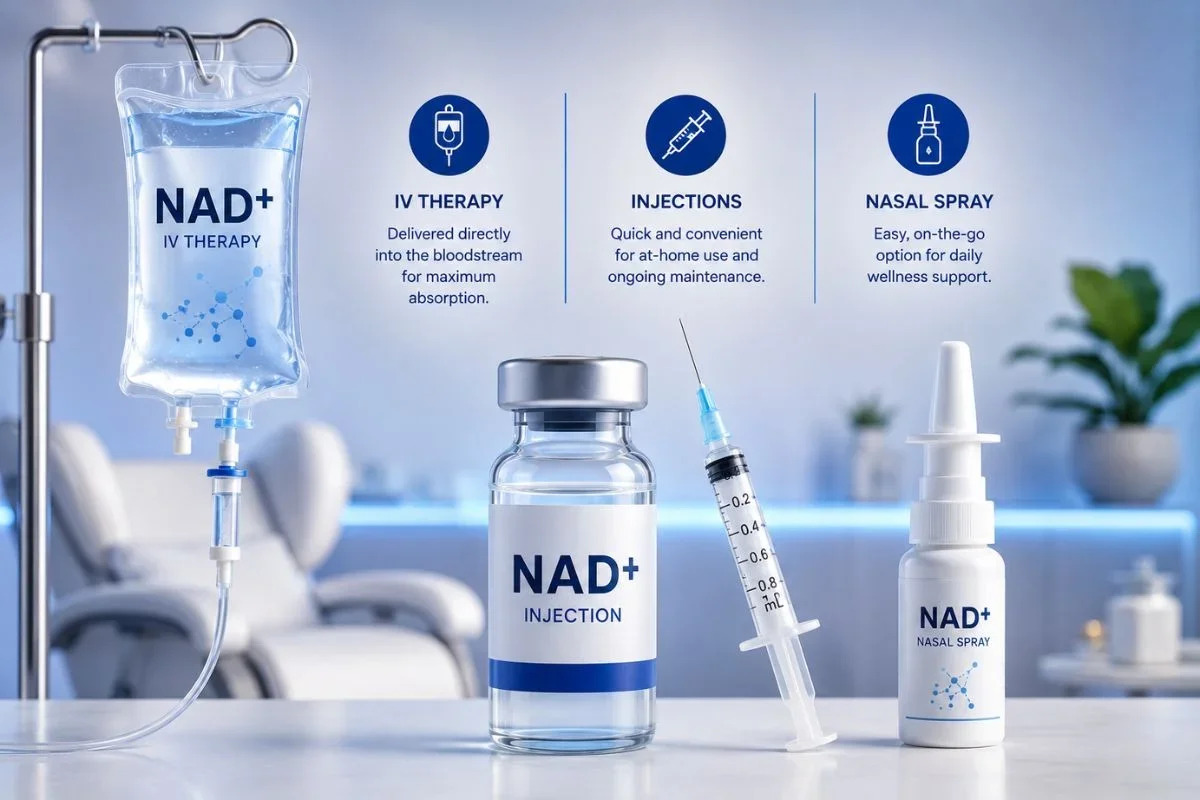
Comparison of NAD+ IV therapy, NAD+ injection, and NAD+ nasal spray displayed in a modern medical setting with an IV bag, injection vial, syringe, and nasal spray bottle representing different NAD+ delivery options.
For people interested in exploring NAD+ therapy, there are a few different delivery methods, and each comes with its own profile.
NAD+ IV therapy delivers the coenzyme directly into the bloodstream through an infusion, which allows for higher absorption and is typically administered in a clinical setting over the course of an hour or more. This is often the preferred option for people wanting a more thorough, closely monitored experience.
NAD+ injections, including at-home self-injection options, offer a more convenient way to maintain NAD+ levels between IV sessions. They deliver smaller doses more quickly and are typically used for ongoing maintenance rather than an initial deep replenishment.
A nasal spray format is also available for people who prefer a lower-commitment, on-the-go option.
Choosing between these isn't something to guess at. The right format depends on your health history, goals, and how your body responds, which is why a consultation with a qualified provider should always come first. You can explore Drip Alchemy's full range of NAD+ options, including IV therapy, self-injection, and nasal spray, to see which best fits your lifestyle.
What NAD Results Typically Look Like
People considering NAD+ therapy often want to know what to actually expect. NAD results vary by individual, delivery method, and dose, but many clients report feeling more mentally clear, energized, and generally restored following treatment, particularly with IV therapy.
It's worth noting that these are subjective, self-reported experiences rather than guaranteed outcomes. Individual results vary, and NAD+ therapy should be viewed as one part of a broader wellness approach rather than a standalone fix. Working with an experienced medical provider who can track your progress and adjust your plan over time gives you the clearest picture of how your body is responding.
A Note on Health and Safety
The information in this article is for educational purposes and has not been evaluated by the U.S. Food and Drug Administration. It is not intended to diagnose, treat, cure, or prevent any disease, and individual results may vary. NAD+ therapies are considered investigational. Always consult a qualified healthcare provider before beginning any new treatment.
Why Choose Drip Alchemy for NAD+ Therapy
Understanding the science behind NAD+ is only half the equation. Who administers your treatment matters just as much. At Drip Alchemy NYC, every NAD+ treatment is overseen by an experienced, board-certified nurse practitioner and registered nurse, using ingredients sourced from FDA-approved 503A/B compounding pharmacies and following strict USP 797 and ANA sterility standards.
Our boutique studio is built for clients who want both clinical rigor and a genuinely comfortable, personalized experience, with transparent pricing and no hidden fees.
Frequently Asked Questions
What role does NAD+ play in cellular respiration?
NAD+ acts as an electron shuttle throughout glycolysis, the citric acid cycle, and the electron transport chain, allowing your mitochondria to convert food into usable cellular energy in the form of ATP.
What are the main NAD+ benefits people look for?
People typically explore NAD+ therapy for support with energy, mental clarity, cellular repair, and overall vitality, particularly as natural NAD+ levels decline with age.
Are NAD+ injections effective for maintaining results?
NAD+ injections are commonly used to maintain levels between larger IV sessions. They offer a convenient, lower-commitment way to support consistency, though individual results vary based on dose and frequency.
How do I know if NAD+ therapy is right for me?
The best way to find out is through a medical consultation. Certain health conditions and medications require careful evaluation before starting NAD+ therapy, which is why a qualified provider should always guide your plan.
Ready to Learn More?
NAD+'s role in cellular respiration isn't just biochemistry trivia. It's the foundation for understanding why this coenzyme has become such a central focus in modern wellness. Whether you're curious about energy, immune resilience, or simply want to feel more like yourself, the best first step is a conversation with a qualified provider.
Book a consultation with our clinicians, reach out with any questions, or book your appointment today. Let's help you feel your absolute best.
