
Can Glutathione Help Reduce the Appearance of Uneven Skin Tone?
Uneven skin tone shows up for a lot of reasons. Sun exposure, hormonal shifts, old breakouts, and stress all of it can leave the skin looking blotchy or dull even when nothing is technically wrong. At Drip Alchemy in NYC, glutathione injections come up often with clients who want brighter, more even looking skin without turning to harsher treatments.
Here's what glutathione actually does, what the research supports, and what to expect if you're considering it.
What Glutathione Is
Glutathione is often called the body's master antioxidant. It's made from three amino acids and produced naturally in the liver, where it plays a central role in detoxification and cellular protection. Every cell in the body relies on it to manage oxidative stress, the kind of cellular damage that builds up from sun exposure, pollution, and everyday metabolic processes.
As people age, or as the body deals with more oxidative load than it can clear on its own, natural glutathione levels tend to drop. That's part of why interest in glutathione injections has grown, both for general wellness and for its effect on skin appearance.
How Glutathione Injections Work
Glutathione injections deliver the antioxidant directly into the muscle, most often the gluteal or thigh area, so it bypasses the digestive system entirely. Oral glutathione has to survive digestion before it reaches the bloodstream, which limits how much actually gets absorbed. An injection skips that step.
At Drip Alchemy, glutathione is available as a self injection kit that includes the vial, sterile syringes and needles, and detailed instructions from the nurse practitioner. A consultation is required before starting, since glutathione isn't right for everyone.
Glutathione Injections Benefits
The benefits people ask about most fall into a few categories:
Detoxification support. Glutathione neutralizes toxins and free radicals as part of the body's natural detox process, supporting liver function along the way.
Skin brightening. This is the benefit most people come in for. Glutathione is thought to reduce pigmentation and support a more even, radiant complexion by interrupting the oxidative processes that contribute to dark spots and dullness.
Anti aging support. By combating oxidative stress at the cellular level, glutathione may help reduce the appearance of fine lines and support more youthful looking skin over time.
Immune support. A well functioning antioxidant system plays a role in immune resilience, which is part of why glutathione is often used as a general wellness tool, not just for skin.
Liver health. Since glutathione is central to the body's detox pathways, supporting its levels can support liver function directly.
Does Glutathione Lighten Skin?
This is one of the most common questions, and it deserves a straight answer. Glutathione doesn't work like a bleaching agent. It doesn't strip pigment from the skin. What it does is interfere with the oxidative pathways that drive melanin production, which over time can lead to a more even tone and reduced appearance of dark spots or discoloration.
The effect is closer to correcting unevenness than lightening skin overall. Clients with sun spots, post inflammatory hyperpigmentation, or general dullness tend to see the most noticeable change, since those are the exact issues tied to oxidative damage that glutathione is designed to address.
How Long for Glutathione to Show Effects on Skin
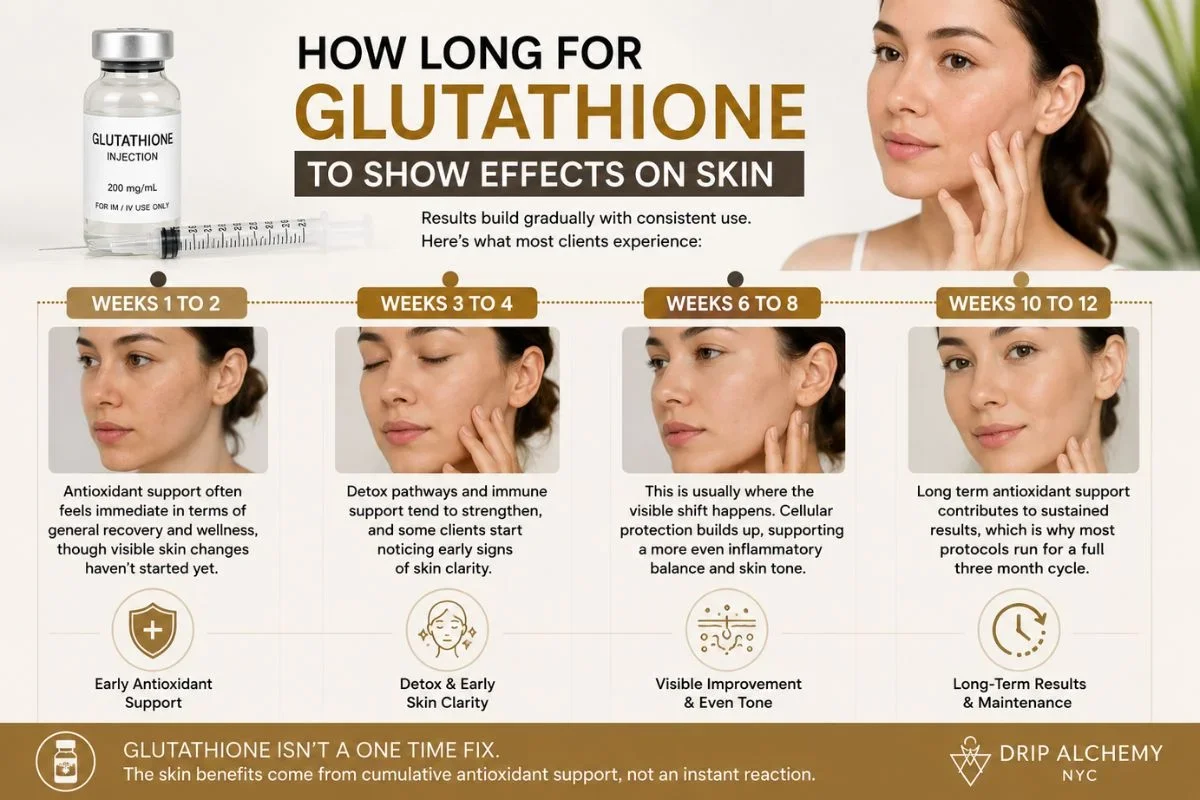
Glutathione skin results timeline showing gradual changes from weeks 1 to 12 and improved skin tone.
Results build gradually, and the timeline below reflects what most clients experience with consistent use.
Weeks 1 to 2. Antioxidant support often feels immediate in terms of general recovery and wellness, though visible skin changes haven't started yet.
Weeks 3 to 4. Detox pathways and immune support tend to strengthen, and some clients start noticing early signs of skin clarity.
Weeks 6 to 8. This is usually where the visible shift happens. Cellular protection builds up, supporting a more even inflammatory balance and skin tone.
Weeks 10 to 12. Long term antioxidant support contributes to sustained results, which is why most protocols run for a full three month cycle.
Glutathione isn't a one time fix. The skin benefits come from cumulative antioxidant support, not an instant reaction.
Glutathione Side Effects on Skin
Glutathione is generally well tolerated. The most common side effect is mild soreness at the injection site, which typically resolves on its own. Some clients report transient effects during the first few sessions as the body adjusts, but serious reactions are uncommon.
That said, glutathione isn't suitable for everyone. It's not recommended for anyone who is pregnant or breastfeeding, has a known sensitivity to glutathione or sulfites, has severe asthma without medical clearance, or has kidney disease or another chronic condition without provider clearance. This is exactly why a consultation comes before treatment, so a nurse practitioner can review your health history and confirm it's a safe fit.
Glutathione in Skincare
Glutathione has become a common ingredient in topical skincare products, but the reality is that topical application and injection work very differently. Topical glutathione has to penetrate the skin barrier to have any effect, which limits how much actually reaches the cells that need it. Injections deliver the antioxidant systemically, supporting skin from the inside as part of a broader wellness protocol rather than relying on surface level absorption.
For clients who want both, glutathione injections pair well with other treatments, including antioxidant focused peptide therapy or IV vitamin infusions, as part of a fuller approach to skin health.
Who Glutathione Is Ideal For
Glutathione tends to be a good fit for people dealing with:
Oxidative stress and general cellular antioxidant support
Liver and detoxification pathway support
Dullness or uneven skin tone from sun damage or old breakouts
Post travel fatigue or general recovery support
Immune resilience during high stress periods or heavy training cycles
Interest in pairing antioxidant support with an existing IV or injection program
What to Expect at Drip Alchemy
Every treatment at Drip Alchemy is administered or personally overseen by Nurse Practitioner Shoko Karakilic, who founded the practice after years of clinical experience across hospitals, medical spas, and vitamin infusion clinics. Glutathione starts with a consultation to review your health history and goals, followed by a personalized protocol built around your specific skin and wellness needs, not a one size fits all package.
If you're curious whether glutathione is right for your skin, book a consultation or reach out through the contact page to get started.
Frequently Asked Questions
Does glutathione whiten skin?
No, not in the sense of bleaching. Glutathione interferes with oxidative pathways tied to melanin production, which can lead to a more even tone and reduced appearance of dark spots, but it doesn't lighten skin uniformly or beyond its natural range.
How often should I get glutathione injections?
Protocols vary by individual, but the standard approach at Drip Alchemy is up to three injections per week for a three month cycle, based on what your nurse practitioner recommends during your consultation.
Is glutathione safe for all skin tones?
Glutathione works on oxidative processes that occur across all skin tones, but individual results and suitability depend on your health history, which is why a consultation and provider evaluation come first.
Do I need blood work before starting glutathione therapy?
No. Blood testing isn't required before starting. Treatment can begin after a medical intake and provider evaluation.
Can I combine glutathione with other treatments?
Yes. Many clients pair glutathione with other antioxidant or skin focused therapies, including GHK Cu peptide, as part of a broader wellness plan. Book your glutathione consultation or visit Drip Alchemy NYC to learn more.
The information in this article has not been evaluated by the U.S. Food and Drug Administration. It is not intended to diagnose, treat, cure, or prevent any disease. Services offered are experimental and investigational in nature, and individual results may vary.
