
Key Takeaways:
Crow’s feet Botox works by temporarily reducing muscle activity around the outer corners of the eyes.
It is most effective for dynamic lines that become more visible when smiling or squinting.
Results appear gradually and typically remain temporary for several months.
The number of Botox units needed varies based on muscle strength, anatomy, symmetry, and treatment goals.
A licensed medical provider should evaluate the eye area carefully before treatment.
Crow’s feet are among the most recognizable expression lines on the face. They appear at the outer corners of the eyes and often become more noticeable with smiling, squinting, and years of repeated facial movement. Because these lines are strongly influenced by muscle activity, Botox is commonly used to soften their appearance.
Botox for crow's feet does not fill the skin or physically remove wrinkles. Instead, it temporarily reduces the movement responsible for repeatedly folding the skin around the eyes. The final result depends on the depth of the lines, individual facial anatomy, muscle strength, and how the treatment is planned.
What Are Crow’s Feet and Why Do They Form?
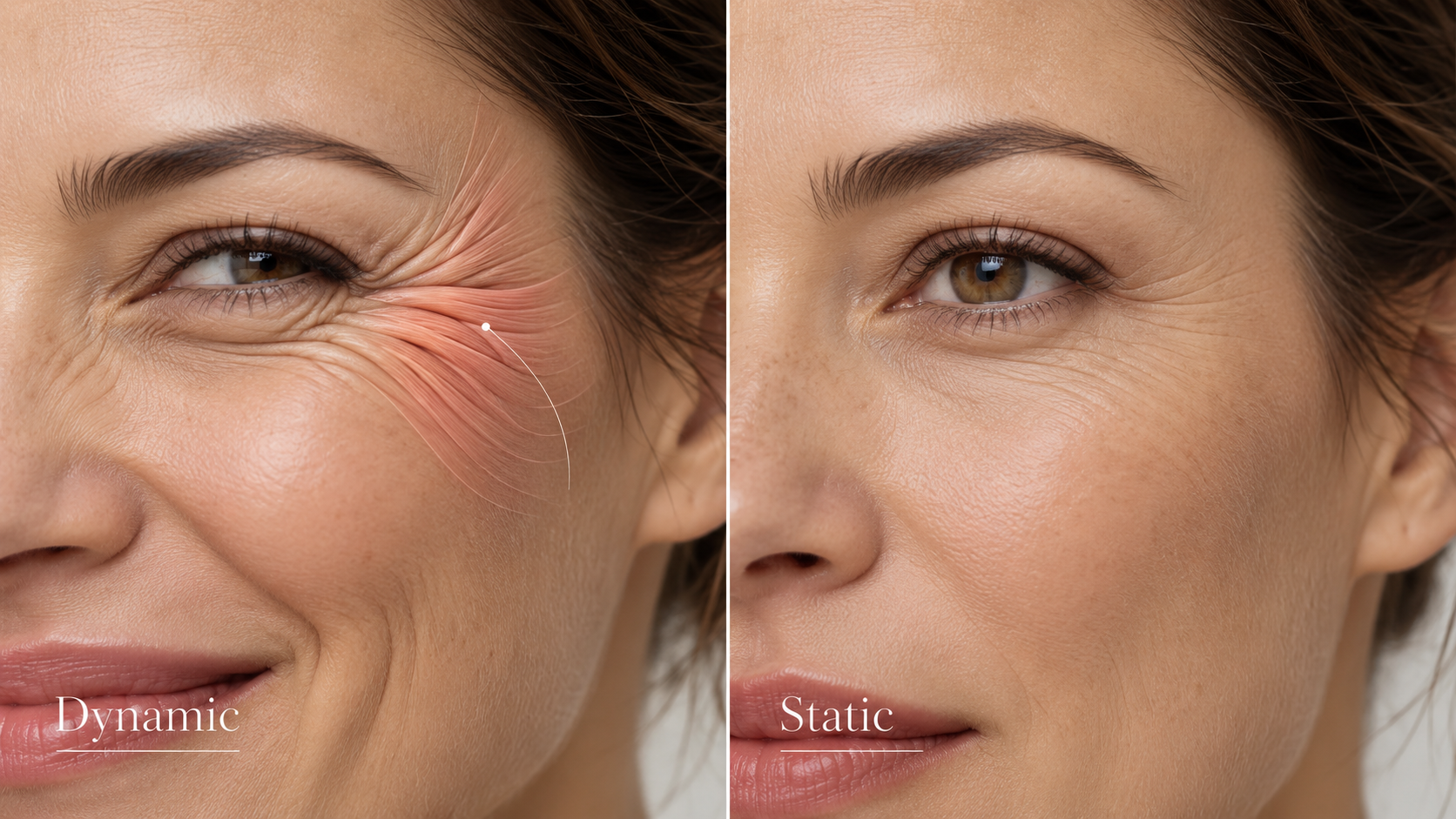
Crow’s feet are fine lines that extend outward from the corners of the eyes. They often resemble small fan-shaped creases and are sometimes called lateral canthal lines.
One of the main muscles involved is the orbicularis oculi, which surrounds the eye and helps with blinking, squinting, and facial expression. Every time this muscle contracts, the skin around the eye folds slightly.
Over time, repeated movement can make these creases more noticeable. Aging also contributes because the skin gradually changes in elasticity, hydration, and collagen structure. Sun exposure may further affect the appearance and texture of the skin around the eyes.
Dynamic vs. Static Crow’s Feet
Not every crow’s foot looks the same.
Dynamic crow’s feet appear mainly when smiling or squinting. These lines are closely linked to muscle movement.
Static crow’s feet remain visible even when the face is relaxed. These may reflect a combination of repeated muscle activity, skin aging, collagen changes, and sun exposure.
This distinction matters because Botox primarily targets the muscle activity contributing to dynamic lines.
Does Botox Help Crow’s Feet?
Yes. Botox Cosmetic is commonly used to temporarily improve the appearance of lateral canthal lines, better known as crow’s feet.
So, does Botox help crow’s feet? It can be very effective when the wrinkles are largely driven by repeated muscle contraction.
Botox works by temporarily reducing the nerve signals that tell selected muscles to contract. When the muscles around the outer eyes move less strongly, the skin folds less intensely during smiling and squinting.
This can make crow’s feet look softer and smoother.
However, Botox does not rebuild collagen or add volume to the skin. Deep lines that remain visible at rest may improve, but they may not disappear completely with Botox alone.
For a broader explanation of how the treatment works, see Drip Alchemy NYC’s Botox treatment page.
How Do Botox Injections for Crow’s Feet Work?
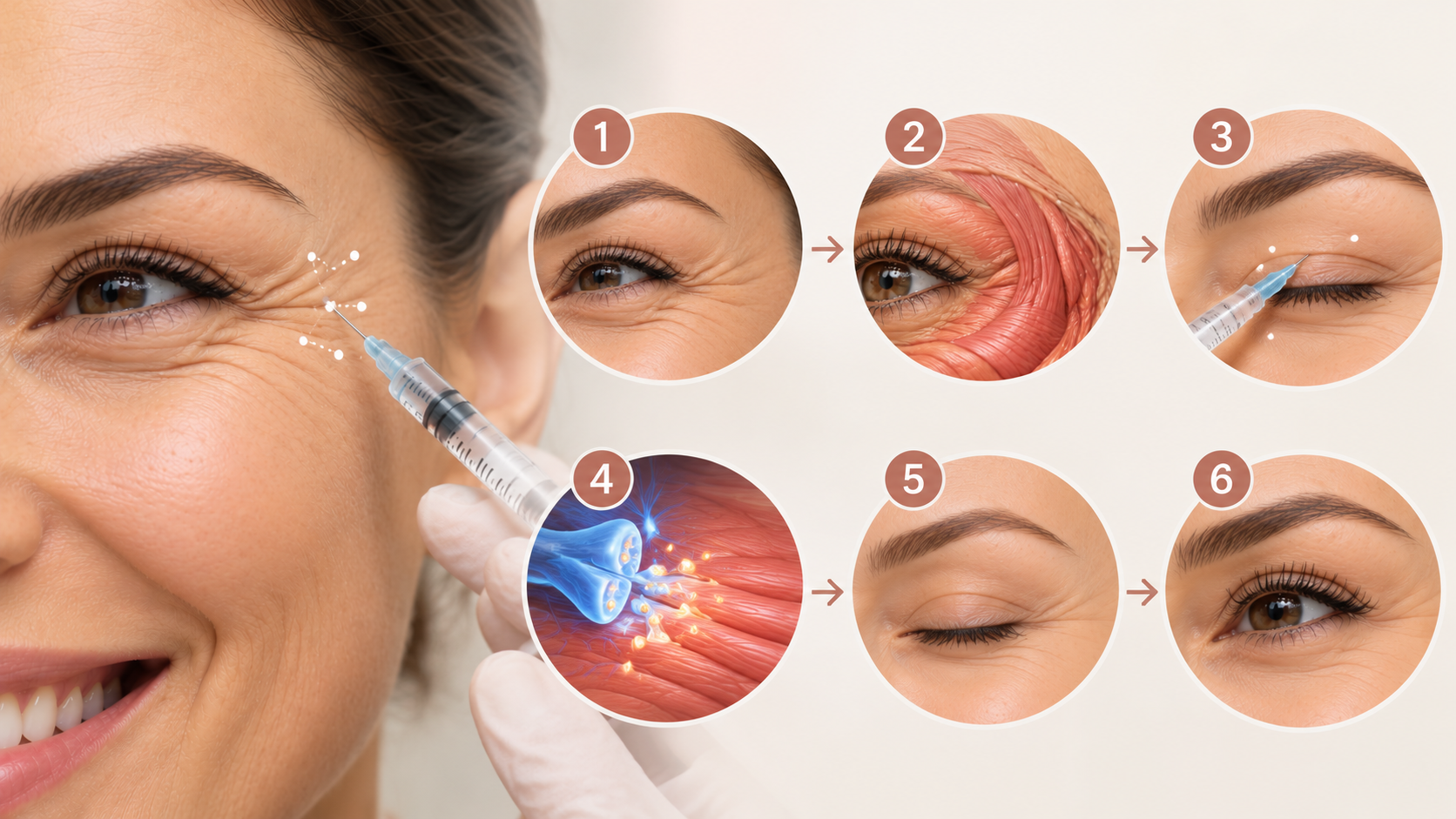
Botox injections for crow's feet are placed around the outer eye area where muscle activity contributes to the formation of wrinkles.
Before treatment, the provider typically evaluates the face both at rest and during expression. Smiling or squinting helps reveal how strongly the orbicularis oculi contracts and whether one side moves differently from the other.
Small amounts of Botox are then injected into selected areas of the muscle.
The goal is not necessarily to eliminate all movement. Careful treatment aims to reduce excessive contraction while preserving a natural-looking smile and overall facial balance.
Because the skin and muscles around the eyes are delicate, placement is especially important in this area.
What Do Crow’s Feet Botox Results Look Like?
Good crow’s feet Botox results usually look smoother rather than dramatically different.
After treatment, patients may notice:
Softer fan-shaped lines around the outer eyes
Less intense creasing while smiling
A smoother appearance at the corners of the eyes
More relaxed-looking expression lines
Natural facial movement that is still recognizable
The result should not make the entire eye area look frozen.
People searching for smiling Botox before and after crow’s feet photos should pay attention to how the photos are taken. A useful comparison shows the same facial expression, similar lighting, a similar camera angle, and the same degree of smiling.
Comparing a relaxed before photo with a smiling after photo can make the result difficult to judge accurately.
When Do Botox Results for Crow’s Feet Appear?
Botox does not work immediately.
The effect usually develops gradually as the treated muscles begin responding to the medication.
During the first several days, some people may start noticing less movement around the treated area. The result often becomes easier to evaluate after the treatment has had more time to settle.
Providers commonly assess the final early result around the one-to-two-week mark, although individual response can vary.
This gradual timeline is different from dermal filler, where added volume may be visible much sooner.
How Long Does Botox Last for Crow’s Feet?
Botox results are temporary.
For many patients, treatment around the eye area lasts for several months. A commonly discussed range is around three to four months, although some people may notice the effect wearing off earlier or remaining noticeable somewhat longer.
There is no single timeline that applies to everyone.
As the effect begins to fade, muscle movement gradually returns. Crow’s feet may then become more visible again during smiling or squinting.
Several factors can affect how long results last, including muscle strength, metabolism, treatment history, dose, placement, and individual facial movement.
For a more detailed explanation, read How Long Does Botox Last? Factors That Affect Your Results.
How Many Units of Botox for Crow’s Feet Are Typically Used?

People often search how many units of Botox for crow's feet, but there is no universal dose that is right for every face.
Treatment depends on factors such as:
Strength of the muscles around the eyes
Facial symmetry
Width and depth of the crow’s feet
Previous response to Botox
Brow and eye position
Desired degree of movement reduction
Whether other areas of the upper face are being treated
Botox Cosmetic has established dosing guidance for approved cosmetic indications, but treatment should still be individualized by a qualified provider.
The number of units should not be treated as a DIY formula. More Botox is not automatically better, especially in an area where subtle differences in placement can affect expression and balance.
What Factors Affect How Long Crow’s Feet Botox Lasts?
Several factors can influence how long the effect remains noticeable.
Muscle Strength
People with stronger or more active muscles around the eyes may experience a different treatment duration than someone with lighter muscle activity.
Facial Expression Patterns
Frequent squinting, smiling, or other repetitive expressions can influence how quickly movement becomes noticeable again.
Metabolism
Botulinum toxin effects do not wear off at exactly the same rate in every person.
Injection Placement
Precise placement helps target the intended muscle fibers while minimizing unnecessary spread to surrounding areas.
Dose
The selected amount needs to balance wrinkle reduction with natural expression.
Previous Botox Treatments
Over time, both the patient and provider may gain a clearer understanding of how an individual responds and how long results tend to last.
Skin Quality
Botox addresses muscle movement, but it does not directly reverse sun damage, collagen loss, or changes in skin texture. These factors can influence how visible crow’s feet remain.
Is Botox Around the Eyes Safe?
Botox Cosmetic has an approved cosmetic indication for moderate-to-severe lateral canthal lines.
However, any injectable treatment around the eye area should be performed by an appropriately qualified medical professional.
Possible temporary side effects may include:
Mild redness
Swelling
Tenderness
Bruising
Headache
Small bumps at injection sites
Unwanted effects can also occur if nearby muscles are affected, which is one reason knowledge of facial anatomy and careful injection technique are important.
No cosmetic injection is completely risk-free, and individual medical history should be reviewed before treatment.
What Should You Expect During a Crow’s Feet Botox Appointment?
A crow’s feet Botox appointment usually begins with an assessment rather than the injections themselves.
Your provider may ask about:
Medical history
Previous Botox treatments
Current medications
Treatment goals
Previous reactions to injectables
Changes you want to see around the eye area
You may then be asked to smile, squint, and relax so the provider can evaluate how the muscles move.
The skin is cleaned, injection points are selected, and small amounts of Botox are placed using a fine needle.
For a more detailed breakdown, see What to Expect at Your First Botox Appointment.
What Should You Do After Crow’s Feet Botox?
Aftercare is usually straightforward, but it is important to follow the instructions given by your provider.
General guidance may include avoiding rubbing or massaging the treated area and following any recommendations about exercise, positioning, skincare, or other activities after treatment.
Mild redness or tenderness can occur shortly after the injections.
It is also important not to judge the final result immediately. Botox needs time to affect muscle activity.
Drip Alchemy NYC has a more detailed guide on Botox aftercare during the first 24–48 hours.
Can Botox Prevent Crow’s Feet From Getting Deeper?
Botox may help reduce repetitive folding of the skin while the treatment is active.
Because repeated facial movement contributes to dynamic crow’s feet, reducing that movement may help prevent the lines from appearing as strongly during the treatment period.
However, Botox should not be viewed as a permanent prevention method.
Skin aging continues even while muscle activity is reduced. Genetics, collagen changes, environmental exposure, and sun damage also influence how wrinkles develop over time.
Daily sun protection and an appropriate skincare routine remain important parts of maintaining the skin around the eyes.
Who May Be a Good Candidate for Crow’s Feet Botox?
Botox may be considered by adults who are bothered by expression lines around the outer corners of the eyes and want a temporary, non-surgical option.
A good candidate generally understands that:
Results are temporary
Maintenance may be needed
Complete wrinkle removal is not guaranteed
The goal is often softening rather than freezing expression
Individual anatomy affects the treatment plan
Medical history, medications, pregnancy status, neurological conditions, previous reactions, and other health factors may also affect candidacy.
A qualified provider should determine whether treatment is appropriate.
Crow’s Feet Botox in NYC: Why Provider Experience Matters
The area around the eyes requires careful treatment because small differences in muscle activity can affect the appearance of the brows, smile, and overall facial balance.
A provider should assess more than the wrinkles themselves. Muscle strength, symmetry, eye shape, brow position, and movement patterns all influence the treatment plan.
At Drip Alchemy NYC, Botox treatments are provided by a licensed medical team using an individualized approach based on facial anatomy, movement, and aesthetic goals.
Frequently Asked Questions
Does Botox help crow’s feet?
Yes, Botox can temporarily soften crow’s feet caused by repeated muscle movement around the outer eye area. It works by reducing contraction of selected muscles, which decreases how strongly the skin folds when smiling or squinting.
How long does Botox for crow’s feet last?
Results commonly remain noticeable for several months, often around three to four months, although duration varies. Muscle activity, metabolism, treatment history, dose, and injection technique can all influence how long the effect lasts.
How many units of Botox are needed for crow’s feet?
There is no single dose that is right for everyone. The amount depends on muscle strength, facial anatomy, symmetry, treatment goals, and provider assessment. Dosing should be individualized rather than based on a fixed number alone.
When will I see results from crow’s feet Botox?
Botox works gradually. Some changes may begin within several days, while the result is usually easier to evaluate after one to two weeks. Individual response and treatment plan can affect the exact timeline.
Can Botox completely remove crow’s feet?
Botox can significantly soften dynamic crow’s feet, but deeper static lines may remain visible because Botox does not replace collagen or resurface the skin. The goal is usually improvement rather than guaranteed complete removal.
Does crow’s feet Botox change your smile?
Well-planned treatment is intended to soften excessive muscle contraction while preserving natural expression. Because the muscles around the eyes contribute to smiling, careful placement and individualized dosing are important for maintaining facial balance.
What should smiling Botox before and after crow’s feet photos look like?
Useful before-and-after photos should use similar lighting, facial angle, expression, and smile intensity. Comparing the same expression makes it easier to judge whether crow’s feet have softened after treatment.
Final Thoughts
Botox for crow's feet can be an effective option for softening expression lines around the outer corners of the eyes. The treatment works by temporarily reducing muscle activity, which can make the skin crease less strongly during smiling and squinting.
Results appear gradually, typically last for several months, and vary according to anatomy, muscle strength, treatment history, and individual response.
At Drip Alchemy NYC, Botox treatment is personalized around facial movement, anatomy, and aesthetic goals. A consultation can help determine whether crow’s feet Botox is appropriate and what kind of result may be realistic for your features.
